(3)
Spend more to get free priority shipping
Great. You will get complimentary priority shipping for free.
Previous registration has been removed from the cart as only one animal registration is allowed at a one time.

Spend more to get free priority shipping
Great. You will get complimentary priority shipping for free.
Previous registration has been removed from the cart as only one animal registration is allowed at a one time.
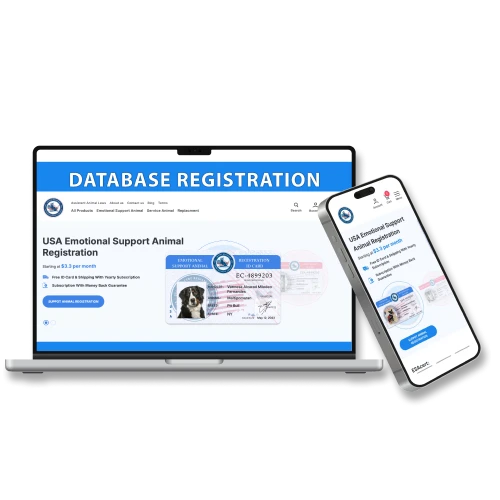
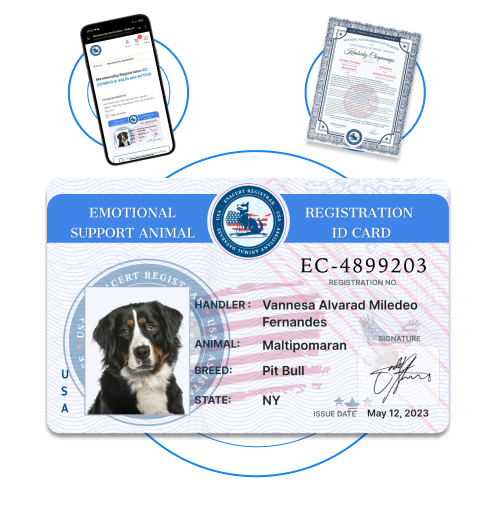
Please note that there is no unified Assistant Animal database registration in the USA.
You cannot verify information from other registrars on the esa-cert.com website

A brief overview of trusted Service Animal training methods, skill requirements, and resources to help handlers build effective, task-focused training routines.


You can train your own dog to be a service dog. The ADA does not require a professional program, a certificate, or a registration. What it does require is that the dog be individually trained to do work or perform tasks directly related to your disability, and that it behave reliably in public. This guide covers how to tell whether your dog is a good candidate, the stages of training, the public access standards to aim for, and the programs and resources that can help.
Under the ADA, a service animal is a dog individually trained to do work or perform tasks for a person with a disability. Examples include guiding a person who is blind, alerting a person who is deaf to sounds, retrieving dropped items, alerting to a seizure or a drop in blood sugar, and, for psychiatric service dogs, interrupting a panic attack or applying deep pressure on cue.
The line between a psychiatric service dog and an emotional support animal is training. The Department of Justice explains that if a dog “has been trained to sense that an anxiety attack is about to happen and take a specific action to help avoid the attack or lessen its impact, that would qualify as a service animal,” while a dog whose “mere presence provides comfort” would not. If comfort is what your dog provides, see our ESA training and handler guide instead.
Labrador Retrievers, Golden Retrievers, Standard Poodles, and German Shepherds are common choices, but the ADA does not limit breeds. The individual dog’s temperament is what counts.
Sit, down, stay, come, leave it, and walking on a loose leash, all reliable with distractions. The American Kennel Club’s Canine Good Citizen test is a useful checkpoint for this stage. Use positive reinforcement and keep sessions short and frequent.
Gradual, positive exposure to people of all ages, other dogs, traffic, elevators, slick floors, crowds, and loud sounds. Watch for stress signals and keep each new experience at a level your dog can handle calmly.
Break each task into small steps and reward each one. For psychiatric tasks, many handlers start by teaching a behavior on cue, such as deep pressure or a nudge, and then pair the cue with early signs of an episode. Tasks must relate directly to your disability. A professional trainer can be especially helpful at this stage.
Practice in dog-friendly places first, then in quieter public settings, building toward busy ones. The International Association of Assistance Dog Partners recommends “a minimum of one hundred twenty (120) hours of training over a period of Six Months,” with at least 30 hours devoted to outings. Your dog should:
Skills fade without practice. Keep up short refresher sessions for the life of the dog, and reassess if behavior changes.
| Owner training | Professional program | |
|---|---|---|
| Cost | Lower, mainly classes, trainer sessions, and equipment | Often high; some nonprofits place dogs at low or no cost but have waiting lists |
| Time | Months to years of your own effort | The program trains the dog; you attend team training |
| Dog | Your own dog, if it is a good candidate | A dog selected and bred for the work |
| Support | A private trainer can help with tasks and public access | Structured support and follow-up |
Nonprofit programs include Canine Companions, NEADS World Class Service Dogs, and, for guide dogs, The Seeing Eye. Assistance Dogs International lists programs that meet its accreditation standards. For owner training, look for a trainer certified by the Certification Council for Professional Dog Trainers who has worked with service dog teams.
Under the Department of Transportation’s rule effective January 11, 2021, airlines may require a DOT form attesting to the dog’s health, behavior, and training, submitted up to 48 hours before travel for reservations made earlier. Our prefilled DOT service animal form helps you prepare it.
The Fair Housing Act requires reasonable accommodations for people with disabilities, and since May 2026 HUD focuses its assistance animal enforcement on individually trained animals like service dogs. See our guide to the 2026 HUD changes for details.
Yes. The ADA allows people with disabilities to train their own service dogs and does not require a professional program.
It varies with the dog and the tasks. A common benchmark is at least 120 hours over six months, and many teams train for a year or more before the dog is reliable in public.
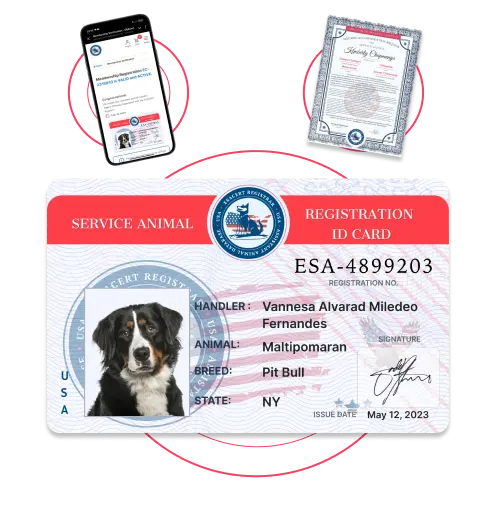
No. The ADA does not require certification or registration, and those documents do not grant access rights. Some handlers carry an ID card for convenience.
Yes, when it is trained to perform specific tasks related to the condition, such as interrupting a panic attack, applying deep pressure on cue, or waking the handler from nightmares. Comfort from the dog’s presence alone does not qualify.
Yes. The ADA does not restrict breeds. The individual dog’s temperament, health, and training are what matter.

Yes — the animal itself is still protected. What changed on 22 May 2026 is ...
Yes — the animal itself is still protected. What changed on 22 May 2026 is federal enforcement of pet-fee waivers, and the answer now depends on your state. Updated with the California Civil Rights Department alert of 20 July 2026.

Most people don't realize that California's "no pets" policies cannot be ...
Most people don't realize that California's "no pets" policies cannot be used to deny an emotional support animal. Emotional Support Animal Laws in California give you real, enforceable rights. If your landlord is refusing your ESA based on a no-pet clause, they may be violating both federal and state law. This guide breaks down what those ...

Renting with an emotional support animal in Virginia can feel uncertain. ...
Renting with an emotional support animal in Virginia can feel uncertain. Many tenants don't know exactly which laws protect them, and not every landlord makes it easy to find out. Virginia's Fair Housing Law is clear: if you have a documented emotional support animal, your landlord must work with you. This guide covers emotional support ...

Georgia's emotional support animal laws create genuine confusion, even for ...
Georgia's emotional support animal laws create genuine confusion, even for people who have been through the process before. The rules split across federal and state law. The gap between your housing rights and everything else is bigger than most people realize. Your emotional support animal gets strong protections at home. Public spaces and ...

Are you a renter in North Carolina who needs an animal to help with ...
Are you a renter in North Carolina who needs an animal to help with depression or anxiety but fears pet rules or fees? Emotional Support Animal Laws Nc protect tenants under the Fair Housing Act, stop most pet fees, and ban breed and weight limits; Disability Rights North Carolina can help renters. This post will explain housing rights, how ...

Many Texas renters and workers assume their emotional support animal has ...
Many Texas renters and workers assume their emotional support animal has the same legal standing as a service dog. That assumption creates real problems. Emotional support animals do get solid protection under the Fair Housing Act. But those rights are more limited than most people expect, especially after significant legal changes in ...

If your landlord is pushing back on your emotional support animal, the law ...
If your landlord is pushing back on your emotional support animal, the law is on your side in Colorado. The Fair Housing Act gives tenants strong housing protections for ESAs, but these rights have real limits that many people don't discover until they need them most. Most guides stick to the basics. What they often miss are the places where ESA ...

Yes, an apartment can deny an emotional support animal in some situations, ...
Yes, an apartment can deny an emotional support animal in some situations, but not for any reason it likes. Under the Fair Housing Act, a landlord has to consider a reasonable accommodation request from a tenant with a disability, look at the individual animal and the individual request, and base any denial on specific facts. What changed in 2026 ...
Price:
Your current registration:
After change, your registration will be:
Your current registration:
will be replaced with:
You have entered the maximum number of characters
You have entered the maximum number of characters
You have entered the maximum number of characters
You have entered the maximum number of characters
You have entered the maximum number of characters
EC-0000001
Oct 14, 2026
-
-
-
-
-
-
You have entered the maximum number of characters
You have entered the maximum number of characters
You have entered the maximum number of characters
You have entered the maximum number of characters
You have entered the maximum number of characters
You have entered the maximum number of characters
You have entered the maximum number of characters
Enter at least 3 characters to search. You have entered: