(3)
Spend more to get free priority shipping
Great. You will get complimentary priority shipping for free.
Previous registration has been removed from the cart as only one animal registration is allowed at a one time.

Spend more to get free priority shipping
Great. You will get complimentary priority shipping for free.
Previous registration has been removed from the cart as only one animal registration is allowed at a one time.
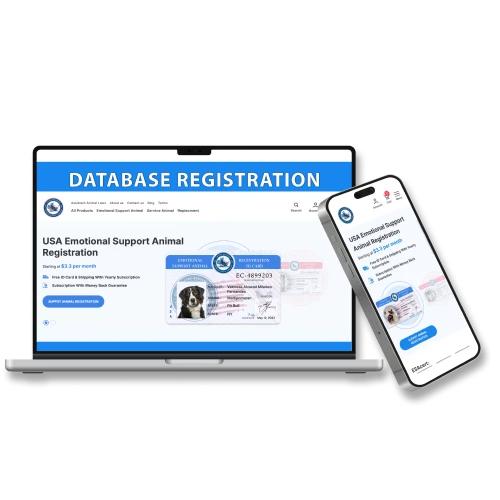
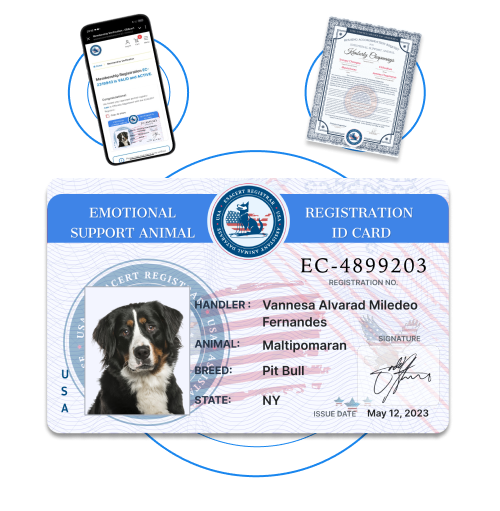
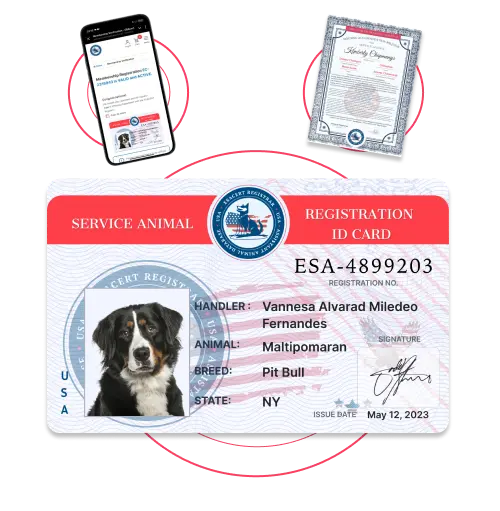
Please note that there is no unified Assistant Animal database registration in the USA.
You cannot verify information from other registrars on the esa-cert.com website

Renting with an emotional support animal in Virginia can feel uncertain. Many tenants don't know exactly which laws protect them, and not every landlord makes it easy to find out. Virginia's Fair Housing Law is clear: if you have a documented emotional support animal, your landlord must work with you. This guide covers emotional support ...


Renting with an emotional support animal in Virginia can feel uncertain. Many tenants don’t know exactly which laws protect them, and not every landlord makes it easy to find out.
Virginia’s Fair Housing Law is clear: if you have a documented emotional support animal, your landlord must work with you.
This guide covers emotional support animal laws in Virginia from the ground up. You’ll learn the key state and federal protections, what valid documentation looks like, what your landlord can and cannot do, and where the rules stand for travel and public spaces in 2026.
On 22 May 2026 HUD rescinded its 2020 assistance-animal guidance and now finds cause on a pet-policy waiver only where the animal has been individually trained to perform a disability-related task. That is a change in how HUD enforces the Fair Housing Act, not a change to the Act itself: the FHA has not been amended, the existing court decisions still stand, and a tenant can still bring a private lawsuit. State law is untouched as well. Our full breakdown of the 2026 HUD change covers what it does and does not do, state by state. Virginia’s Fair Housing Law prohibits disability discrimination in housing and requires reasonable accommodation. Before you agree to pay a pet fee — or, if you are a housing provider, before you charge one — confirm the current position with the Virginia Fair Housing Office.
Virginia state law protects emotional support animals under the Fair Housing Act and the Americans with Disabilities Act. Understanding how these ESA laws work in Virginia is the first step toward protecting your rights as an assistance animal owner.
The Fair Housing Act protects people with emotional support animals across the United States, including Virginia. Under this federal law, landlords must provide reasonable accommodations for tenants who have disabilities and need an ESA.
The Code of Virginia also recognizes emotional support animals as legitimate assistance animals for individuals with mental health conditions. Landlords are no longer automatically required to waive pet fees or additional deposits for your ESA. HUD withdrew its 2020 assistance-animal guidance on 17 September 2025 and permanently rescinded it on 22 May 2026, so you must show the waiver is necessary because of your disability and reasonable for the property.
According to Virginia Code § 36-96.3:1, that protection is backed by state statute. You remain financially responsible for any physical property damage your ESA causes, whether or not a fee waiver is granted. Your housing rights and your personal accountability go hand in hand.
Tenants with proper documentation from a licensed mental health professional receive full legal protection against housing discrimination. This documentation validates your need for an ESA and must connect your disability to the therapeutic relationship you share with your animal.
Landlords can request verification of the disability connected to your ESA, but they cannot demand excessive information or medical records. The Virginia Consumer Protection Act safeguards tenants from unfair housing practices related to their emotional support animals.
Legal protections exist to ensure that people with disabilities receive the housing accommodations they deserve.
Your responsibility includes caring for and controlling your ESA at all times within your dwelling. Register ESA Online at Esa-cert.com to keep your documentation organized and accessible when landlords request proof of your animal’s status.
Understanding the differences between emotional support animals and service animals matters for Virginia residents. Each type of animal serves different purposes under the law. Here is a detailed comparison.
| Aspect | Emotional Support Animals (ESAs) | Service Animals |
|---|---|---|
| Training Requirements | ESAs receive no specific task training. Animals provide comfort through their presence alone. | Service animals undergo extensive training. Dogs learn to perform specific tasks for individuals with disabilities. |
| Primary Function | ESAs offer emotional support. These animals help reduce anxiety and provide companionship. | Service dogs assist with disability-related tasks. Animals perform actions like guiding, alerting, or retrieving items. |
| Animal Types | Any domesticated animal can serve as an ESA. Cats, rabbits, birds, and other creatures qualify. | Service animals are typically dogs. Miniature horses occasionally serve in this capacity. |
| Legal Coverage | ESAs lack Americans with Disabilities Act protections. Virginia law recognizes ESAs for housing purposes only. | Service animals receive full ADA coverage. Federal law grants these animals broad public access rights. |
| Housing Rights | Landlords must provide reasonable accommodations. Virginia requires housing access for ESA owners. | Service animals enjoy the same housing protections. Federal law mandates landlord compliance. |
| Public Access Rights | ESAs may not enter public spaces freely. Restaurants, stores, and offices can restrict animal access. | Service animals access most public areas without restriction. Businesses cannot deny entry to working service dogs. |
| Air Travel Access | Since 2021, airlines classify ESAs as standard pets. Standard fees and carrier restrictions apply. | Service animals travel in aircraft cabins. Airlines must accommodate working service dogs. |
| Documentation Needs | Professional documentation establishes ESA eligibility. A licensed mental health professional must provide verification. | Service animals require training certification. No specific letter documentation is legally required. |
ESAs and service animals both provide real support for people with disabilities, but the law treats them very differently. Choosing the right animal classification directly affects your access rights in housing, public spaces, and travel.
One important warning: under Virginia Code § 51.5-44.1, falsely representing an ESA as a trained service animal to gain public access is a Class 4 misdemeanor. Putting a vest or ID on your ESA to bypass public access restrictions carries real legal consequences. The distinction between these two categories is not just a technicality.
Virginia’s Fair Housing Act protections give you real power when you rent with an ESA. Your landlord must follow specific rules under federal and state law, and you gain rights that most pet owners never receive.
The Fair Housing Act protects tenants with emotional support animals across Virginia rental properties, condos, and most housing types. Federal law requires that landlords provide reasonable accommodations for individuals with documented ESA needs.
Your landlord cannot reject your housing application because you own an emotional support animal — that protection is unchanged. Extra fees are now a separate question: since 22 May 2026 HUD no longer treats a refusal to waive them as a violation on its own, so a fee waiver is requested and assessed on its merits. Discrimination based on your need for an ESA still violates both federal and state fair housing laws.
Tenants must notify their landlords about their ESA and submit required documentation from a licensed mental health service provider. This documentation establishes the genuine connection between your mental health condition and your need for the animal’s support.
Landlords carry specific responsibilities under VA Code § 51.5-44(e). They must accept valid ESA letters from any qualified licensed mental health service provider (LMHP) who can verify your psychiatric need. Your landlord cannot demand specific breeds, sizes, or species restrictions for your emotional support animal.
Fair housing protections ensure that individuals with emotional support animals receive equal treatment in the rental market, free from discrimination or unreasonable barriers.
Tenants enjoy equal protection whether they rent from private owners or large management companies. Documentation requirements exist to prevent fraud, but legitimate ESA owners receive full legal protection under these housing regulations.
Landlords in Virginia must provide reasonable accommodations for tenants with documented emotional support animals. Virginia Fair Housing Law gives tenants strong protections that prevent landlords from refusing ESA requests without valid legal reasons.
Here is what the law requires of landlords:
According to guidelines from the Virginia Fair Housing Office, these protections do have specific limits. Landlords are legally permitted to deny an ESA request, or require removal of the animal, if it causes substantial, unmitigated property damage or poses a direct, documented threat to the health and safety of others. This exception does not apply based on general fear or discomfort. The threat or damage must be real and documented.
Tenants can challenge landlord denials of ESA accommodations through fair housing agencies. Virginia General Assembly protections support tenant rights in these disputes. If your landlord refuses a valid ESA request without legal grounds, you have a clear path to file a formal complaint.
You need proper paperwork to prove your animal qualifies as an emotional support animal in Virginia. A licensed mental health professional must write an ESA letter confirming your support animal helps you manage your mental health condition, such as anxiety or depression.
An ESA letter serves as the official document that proves your emotional support animal provides real mental health benefits. A licensed mental health professional must issue this letter after evaluating your condition.
The letter validates your need for an ESA and protects your housing rights under the Fair Housing Act. Professional documentation from a qualified provider carries significant weight in Virginia housing disputes.
A properly formatted ESA letter should contain the following key elements:
Landlords cannot deny your housing request without this essential paperwork. Without a valid letter, landlords can legally reject your ESA under Virginia law.
For air travel, it is important to know that the rules shifted significantly in 2021. Airlines no longer have a legal obligation to accept ESA letters for cabin access. You can review the current federal guidance on passenger rights through the Air Carrier Access Act resources published by the U.S. Department of Transportation.
This paperwork protects both you and your landlord by establishing clear, legal boundaries. Professional documentation transforms your pet into a recognized assistance animal with real legal standing.
Your ESA letter must come from a licensed mental health professional who has genuine knowledge of your specific situation. Not every provider qualifies, so it is important to work with the right person.
These professionals can write a valid ESA letter in Virginia:
Your provider must have a genuine professional relationship with you. Remote consultations are acceptable, but the professional must actually evaluate your condition. Unlicensed individuals cannot issue legitimate ESA letters under Virginia law.
Be cautious with online ESA letter services. Some employ actual licensed professionals and operate legitimately. Others are essentially template mills with no real evaluation process. Under Virginia Code § 36-96.3:1(F), healthcare providers who issue fraudulent ESA documentation without establishing a genuine therapeutic relationship violate the Virginia Consumer Protection Act and face civil penalties. Choosing a legitimate provider protects both you and your professional.
Understanding public and travel access rules helps you know where your ESA can go.
ESAs face different rules when you travel or visit public places in Virginia. The protections you have in housing do not automatically follow you into other spaces.
Following a 2021 revision to the Air Carrier Access Act by the U.S. Department of Transportation, airlines are no longer required to accommodate emotional support animals. This is a significant shift that many ESA owners are not aware of heading into 2026.
Today, airlines legally classify ESAs as standard pets. Standard pet travel fees, carrier size restrictions, and cabin access limits all apply to your animal. The rules that once gave ESA owners in-cabin access as a right no longer exist at the federal level.
Each airline now sets its own policies for ESAs. Some carriers may still allow ESAs in the cabin under their individual pet policies. Others require your animal to travel in the cargo hold, and fees vary by carrier and route.
Here is what to do before you book a flight with your ESA:
Psychiatric service dogs have broader protections under federal law and are treated differently from ESAs by airlines. If your mental health condition requires a trained psychiatric service dog, that distinction matters significantly for air travel planning.
Your preparation and direct communication with the airline will have the biggest impact on your travel experience with your emotional support animal.
ESAs do not have the same public access rights as service animals under federal law. Your emotional support animal cannot enter most restaurants, stores, or public accommodations simply because you own it.
The Fair Housing Act and the Americans with Disabilities Act protect ESAs in housing, but these laws do not extend to general public spaces. Business owners can refuse entry to your ESA if it is not a trained service animal certified to perform specific tasks.
State and local regulations in Virginia may provide some additional protections, but these vary by location and establishment. Here are a few practical steps that can help:
Some Virginia businesses may grant access based on company policy rather than legal requirements. Asking ahead saves you and your animal an unnecessary trip.
Virginia’s emotional support animal laws give you real protections as a tenant. The Fair Housing Act shields you from housing discrimination and requires landlords to make reasonable accommodations, though pet-fee waivers are now assessed case by case.
Your ESA letter from a licensed mental health professional is the foundation of those protections. Keep it current, keep it accessible, and know the specific rules that apply to your situation.
The landscape for emotional support animals continues to shift, especially for air travel. Staying informed about these regulations gives you the confidence to advocate for yourself and your animal companion throughout 2026.
Virginia follows the federal Fair Housing Act, which requires landlords to provide reasonable accommodations for emotional support animals even in properties with no-pet policies. Legal experts like Lisa Guerin at Nolo offer comprehensive guides to help you understand these housing protections.
A landlord can only deny an ESA if the animal poses a direct threat to health or safety, or would cause substantial physical damage to the property that cannot be eliminated by reasonable accommodation.
Nolo provides state-specific legal guides written by attorney-editors like Lisa Guerin and Diana Chaikin. Their resources explain Fair Housing Act protections in clear, actionable terms.
You need an ESA letter from a licensed mental health professional that documents your disability-related need for the animal. The letter must be current and include the provider’s license information. Diana Chaikin at Nolo advises keeping this documentation readily available when requesting housing accommodations.

Yes — the animal itself is still protected. What changed on 22 May 2026 is ...
Yes — the animal itself is still protected. What changed on 22 May 2026 is federal enforcement of pet-fee waivers, and the answer now depends on your state. Updated with the California Civil Rights Department alert of 20 July 2026.

Most people don't realize that California's "no pets" policies cannot be ...
Most people don't realize that California's "no pets" policies cannot be used to deny an emotional support animal. Emotional Support Animal Laws in California give you real, enforceable rights. If your landlord is refusing your ESA based on a no-pet clause, they may be violating both federal and state law. This guide breaks down what those ...

Georgia's emotional support animal laws create genuine confusion, even for ...
Georgia's emotional support animal laws create genuine confusion, even for people who have been through the process before. The rules split across federal and state law. The gap between your housing rights and everything else is bigger than most people realize. Your emotional support animal gets strong protections at home. Public spaces and ...

Are you a renter in North Carolina who needs an animal to help with ...
Are you a renter in North Carolina who needs an animal to help with depression or anxiety but fears pet rules or fees? Emotional Support Animal Laws Nc protect tenants under the Fair Housing Act, stop most pet fees, and ban breed and weight limits; Disability Rights North Carolina can help renters. This post will explain housing rights, how ...

Many Texas renters and workers assume their emotional support animal has ...
Many Texas renters and workers assume their emotional support animal has the same legal standing as a service dog. That assumption creates real problems. Emotional support animals do get solid protection under the Fair Housing Act. But those rights are more limited than most people expect, especially after significant legal changes in ...

If your landlord is pushing back on your emotional support animal, the law ...
If your landlord is pushing back on your emotional support animal, the law is on your side in Colorado. The Fair Housing Act gives tenants strong housing protections for ESAs, but these rights have real limits that many people don't discover until they need them most. Most guides stick to the basics. What they often miss are the places where ESA ...

Your landlord just denied your emotional support animal request. That's a ...
Your landlord just denied your emotional support animal request. That's a frustrating situation, and you deserve a clear picture of where you stand legally. The critical distinction most people miss is this: your ESA is not classified as a pet under federal law. The Fair Housing Act treats your emotional support animal as a reasonable ...

Can You Have More Than One Emotional Support Animal is a common question ...
Can You Have More Than One Emotional Support Animal is a common question for people with anxiety, PTSD, or depression. Federal law, the Fair Housing Act (FHA) and the U.S. Department of Housing and Urban Development let people ask for reasonable accommodation for emotional support animals (ESAs). This post will show how to get an esa letter from ...
Price:
Your current registration:
After change, your registration will be:
Your current registration:
will be replaced with:
You have entered the maximum number of characters
You have entered the maximum number of characters
You have entered the maximum number of characters
You have entered the maximum number of characters
You have entered the maximum number of characters
EC-0000001
Oct 3, 2026
-
-
-
-
-
-
You have entered the maximum number of characters
You have entered the maximum number of characters
You have entered the maximum number of characters
You have entered the maximum number of characters
You have entered the maximum number of characters
You have entered the maximum number of characters
You have entered the maximum number of characters
Enter at least 3 characters to search. You have entered: