(3)
Spend more to get free priority shipping
Great. You will get complimentary priority shipping for free.
Previous registration has been removed from the cart as only one animal registration is allowed at a one time.

Spend more to get free priority shipping
Great. You will get complimentary priority shipping for free.
Previous registration has been removed from the cart as only one animal registration is allowed at a one time.
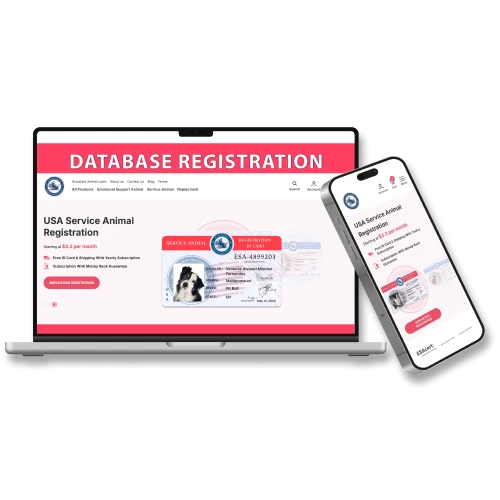
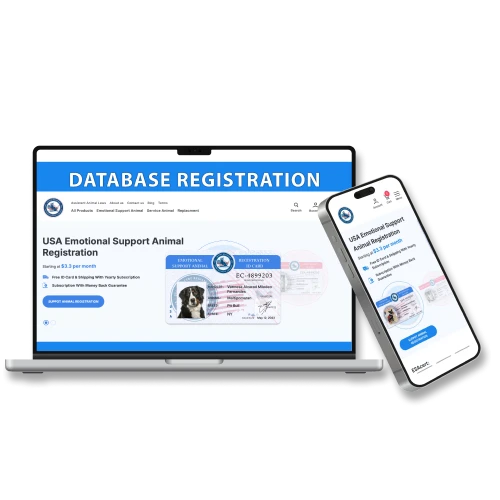
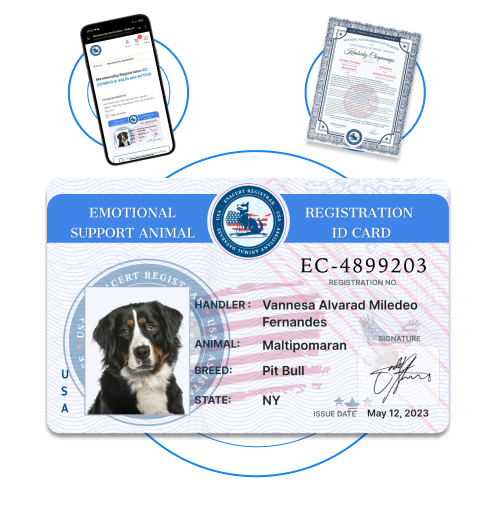
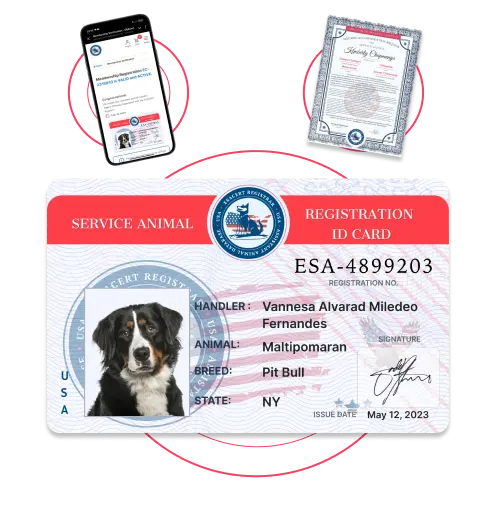
Please note that there is no unified Assistant Animal database registration in the USA.
You cannot verify information from other registrars on the esa-cert.com website

ESA training focuses on calm behavior, socialization, and reliable obedience to ensure the animal fits safely into housing environments. Handlers are responsible for proper care, preventing disturbances, and maintaining documentation for smooth FHA accommodations.


Emotional support animals do not need task training to be emotional support animals. They do need good manners. An ESA that settles quietly at home, walks calmly past neighbors, and does not damage the apartment makes every housing conversation easier, and an animal that bites or destroys property can lose its accommodation. This guide covers the training that matters most for life with an ESA, the responsibilities that come with it, and the point where training can turn an emotional support dog into a psychiatric service dog.
Not in the legal sense. An emotional support animal helps through its presence, and no federal law requires obedience classes or certification for that. In housing, though, a landlord can rely on the animal’s actual behavior: the Fair Housing Act does not require housing to be made available when a tenancy would pose a direct threat to others’ health or safety or cause substantial physical damage to their property (42 U.S.C. §3604(f)(9)). Basic training is the simplest way to make sure your animal never gives anyone a reason to raise those issues.
Training also changes how you are protected. HUD’s enforcement policy since May 2026 focuses on animals individually trained to perform disability-related tasks, and the line between an emotional support dog and a psychiatric service dog is exactly that kind of training. More on that below.
Keep sessions to 5 to 10 minutes, use the same words every time, and practice in new places once the skill is solid at home.
For apartment living, “go to your place” may be the most useful skill of all. Reward your dog for stepping onto a mat, then for lying down on it, then for staying there while you move around. Eventually you can send them to the mat when a neighbor knocks, a delivery arrives, or guests come over.
Reward your dog for walking at your side. If they pull, stop and wait until the leash goes slack, then continue. Short walks with frequent rewards beat long walks full of pulling.
Introduce new people, animals, sounds, and places gradually, at a distance where your animal stays relaxed, and reward calm behavior. Watch for stress signals such as a tucked tail, lip licking, yawning, or turning away. If you see them, increase the distance and slow down. Puppy classes or group obedience classes give structured practice with other dogs.
Many ESAs naturally lean against their person, rest their head on a lap, or stay close on hard days. You can encourage this with rewards, and many owners find it calming.
There is an important line here. The U.S. Department of Justice explains that if a dog “has been trained to sense that an anxiety attack is about to happen and take a specific action to help avoid the attack or lessen its impact, that would qualify as a service animal. However, if the dog’s mere presence provides comfort, that would not be considered a service animal under the ADA.” Owners are allowed to train their own service dogs; a professional program is not required.
If you want your dog to perform a specific task related to your disability, such as interrupting a panic attack, applying deep pressure on cue, or waking you from a nightmare, you are working toward a psychiatric service dog. That brings broader public access under the ADA and, since May 2026, is the kind of animal HUD will pursue housing complaints for. It also brings higher expectations for training and behavior. Our service dog training resources cover that path.
Emotional support animals do not have public access rights under the ADA, so businesses can treat them like any pet. Bring your ESA only to places that allow pets. A vest or ID card can help people understand your animal’s role, but it does not create a right to enter.
Get help early if you see growling, snapping, intense fear, or separation distress. A certified trainer, for example one certified by the Certification Council for Professional Dog Trainers, can help with manners and reactivity. For aggression or severe anxiety, ask your veterinarian about a referral to a veterinary behaviorist, who can also assess medical causes.
No. There is no required training or certification for an emotional support animal. Good manners still matter, because a landlord can act on an animal’s actual behavior.
Start with house training, sit, come, and settling on a mat. Those cover most of what matters in an apartment.
Only where pets are allowed. Good behavior does not change an ESA’s legal status. If your dog is trained to perform a specific task for your disability, it may qualify as a psychiatric service dog instead.
Yes. The ADA allows people with disabilities to train their own service dogs. The dog must be trained to perform a specific task related to the disability and must behave appropriately in public.
You do. An approved accommodation does not change your responsibility for damage your animal causes.

A psychiatric service dog (PSD) is a dog individually trained to perform ...
A psychiatric service dog (PSD) is a dog individually trained to perform specific tasks for a person with a mental health disability such as PTSD, panic disorder, major depression or bipolar disorder. Because it is task-trained, a PSD is a service animal under the Americans with Disabilities Act (ADA) and can go with its handler into stores, ...

Delta accepts fully trained service dogs in the cabin at no charge, while ...
Delta accepts fully trained service dogs in the cabin at no charge, while emotional support animals travel only under Delta's pet rules. To fly with a service dog, you complete the U.S. DOT Service Animal Air Transportation Form and send it to Delta with a service request, ideally at least 48 hours before departure.

A valid emotional support animal letter is a short document from a licensed ...
A valid emotional support animal letter is a short document from a licensed health care professional who has evaluated you and believes you have a disability-related need for an emotional support animal. A strong letter is personal to you, written on the provider's letterhead, shows how to verify the license, and connects the animal to how your ...
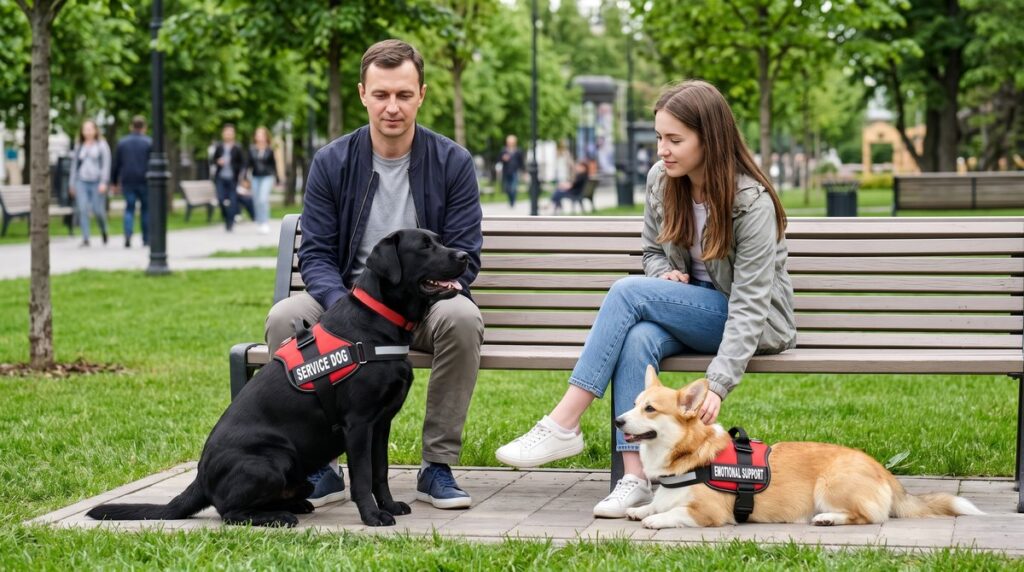
A service dog is individually trained to perform specific tasks for a ...
A service dog is individually trained to perform specific tasks for a person with a disability and can go with its handler into most places open to the public. An emotional support animal (ESA) helps through its presence, is not task-trained, and has no ADA right to enter stores, restaurants, or hotels. A therapy dog visits hospitals, schools, and ...

Yes — the animal itself is still protected. What changed on 22 May 2026 is ...
Yes — the animal itself is still protected. What changed on 22 May 2026 is federal enforcement of pet-fee waivers, and the answer now depends on your state. Updated with the California Civil Rights Department alert of 20 July 2026.

Most people don't realize that California's "no pets" policies cannot be ...
Most people don't realize that California's "no pets" policies cannot be used to deny an emotional support animal. Emotional Support Animal Laws in California give you real, enforceable rights. If your landlord is refusing your ESA based on a no-pet clause, they may be violating both federal and state law. This guide breaks down what those ...

Yes, Virginia protects emotional support animals in housing. The Virginia ...
Yes, Virginia protects emotional support animals in housing. The Virginia Fair Housing Law defines an "assistance animal" to include an animal that provides emotional support for a person's disability (Va. Code § 36-96.1:1), and a separate section, § 36-96.3:1, sets out how a landlord may verify the request and what the tenant pays. Renting with ...

An emotional support animal in Georgia is protected mainly at home: the ...
An emotional support animal in Georgia is protected mainly at home: the federal Fair Housing Act and the Georgia Fair Housing Law (O.C.G.A. § 8-3-200 and following) let you ask a landlord to set aside a no-pets rule as a reasonable accommodation. Outside housing, an ESA has no public access rights, and since July 1, 2026 Georgia law spells that ...
Price:
Your current registration:
After change, your registration will be:
Your current registration:
will be replaced with:
You have entered the maximum number of characters
You have entered the maximum number of characters
You have entered the maximum number of characters
You have entered the maximum number of characters
You have entered the maximum number of characters
EC-0000001
Nov 17, 2026
-
-
-
-
-
-
You have entered the maximum number of characters
You have entered the maximum number of characters
You have entered the maximum number of characters
You have entered the maximum number of characters
You have entered the maximum number of characters
You have entered the maximum number of characters
You have entered the maximum number of characters
Enter at least 3 characters to search. You have entered: