(3)
Spend more to get free priority shipping
Great. You will get complimentary priority shipping for free.
Previous registration has been removed from the cart as only one animal registration is allowed at a one time.

Spend more to get free priority shipping
Great. You will get complimentary priority shipping for free.
Previous registration has been removed from the cart as only one animal registration is allowed at a one time.
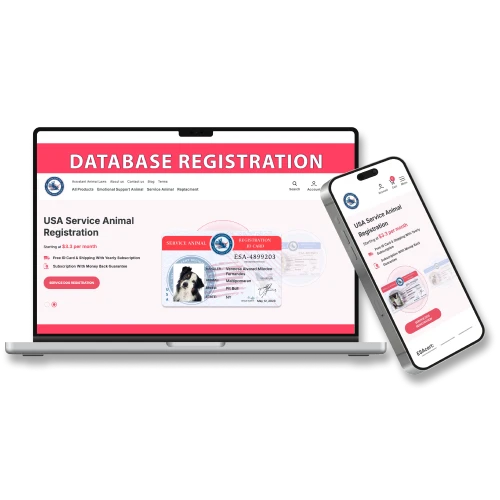
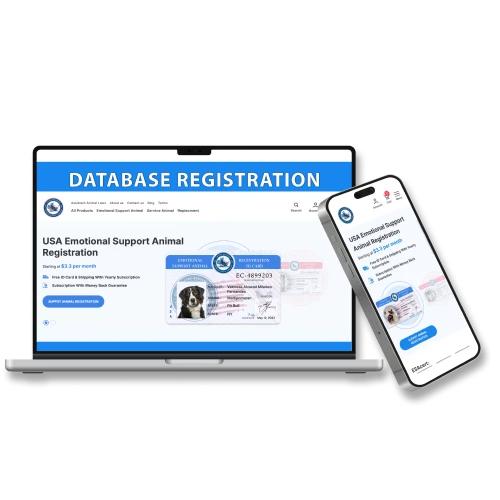
Please note that there is no unified Assistant Animal database registration in the USA.
You cannot verify information from other registrars on the esa-cert.com website

Georgia's emotional support animal laws create genuine confusion, even for people who have been through the process before. The rules split across federal and state law. The gap between your housing rights and everything else is bigger than most people realize. Your emotional support animal gets strong protections at home. Public spaces and ...


Georgia’s emotional support animal laws create genuine confusion, even for people who have been through the process before.
The rules split across federal and state law. The gap between your housing rights and everything else is bigger than most people realize. Your emotional support animal gets strong protections at home. Public spaces and workplaces are a very different story.
Here’s the distinction most people miss: ESA rights are not universal. They apply in specific situations only.
In this guide, I’ll cover your housing rights under the Fair Housing Act, what a valid ESA letter actually requires, how air travel rules have shifted, and exactly where your protections end. By the time you finish reading, you’ll know your full rights under Emotional Support Animal Laws Georgia for 2026.
On 22 May 2026 HUD rescinded its 2020 assistance-animal guidance and now finds cause on a pet-policy waiver only where the animal has been individually trained to perform a disability-related task. That is a change in how HUD enforces the Fair Housing Act, not a change to the Act itself: the FHA has not been amended, the existing court decisions still stand, and a tenant can still bring a private lawsuit. State law is untouched as well. Our full breakdown of the 2026 HUD change covers what it does and does not do, state by state. Georgia’s Fair Housing Law (O.C.G.A. § 8-3-200 et seq.) mirrors the FHA and still requires reasonable accommodation, which includes waiving a no-pets policy for an assistance animal. Before you agree to pay a pet fee — or, if you are a housing provider, before you charge one — confirm the current position with the Georgia Commission on Equal Opportunity.
An emotional support animal, or ESA, provides comfort and emotional support to individuals with psychological conditions. These animals help reduce symptoms of mental health challenges like anxiety, depression, and post-traumatic stress.
Unlike service dogs or psychiatric service dogs, ESAs do not need specialized training to perform specific tasks. Their presence alone helps calm their owners and reduces emotional distress.
Georgia recognizes emotional support animals as legitimate assistance animals for people with disabilities. They offer therapeutic benefits through companionship and consistent affection.
A licensed mental health professional, such as a psychiatrist, psychologist, or therapist, must verify the need for an ESA through proper documentation. This process protects both the individual seeking support and property owners who need confirmation of a legitimate request.
ESAs differ significantly from service animals in legal status and access rights. Service animals undergo extensive training and perform tasks that directly mitigate a disability. Emotional support animals provide comfort through their presence alone.
The Americans with Disabilities Act (ADA) does not cover ESAs in public spaces. The Fair Housing Act, though, provides strong protections in housing situations across all states, including Georgia.
Georgia law requires landlords to grant reasonable accommodations for tenants with an ESA. These landlords are no longer automatically required to waive pet rent or additional fees for the animal. Tenants also cannot face discrimination based on their need for an emotional support animal.
A valid ESA letter from a mental health professional serves as the documentation landlords may request. It confirms the individual’s disability and the therapeutic relationship between the person and their animal.
Georgia housing laws protect your right to keep an emotional support animal in rental housing, even when landlords have strict no-pet policies. The Fair Housing Act requires landlords to make reasonable accommodations for ESAs, though after the May 2026 rescission a waiver of the pet fees that normally apply to regular animals is no longer automatic.
The Fair Housing Act gives you solid housing rights as a tenant with a disability that requires an emotional support animal. Landlords must provide reasonable accommodations for individuals who need ESAs to manage their mental health conditions.
Under this federal law, housing providers cannot refuse your ESA request based on disability-related discrimination. Your landlord must treat your request seriously and evaluate it fairly.
Documentation from a licensed mental health professional establishes your legitimate need for the animal. The Fair Housing Act ensures nondiscrimination in housing situations across all states, including Georgia.
Since HUD rescinded its 2020 assistance-animal guidance on 22 May 2026, landlords are no longer automatically required to waive pet fees or deposits for an emotional support animal under the Fair Housing Act. Your ESA is not a standard pet, so normal pet policies do not apply to your situation.
Housing providers cannot impose additional costs on tenants with documented ESA needs. Federal law recognizes emotional support animals as a form of legitimate support for individuals with mental health conditions, placing ESAs on equal footing with other disability-related accommodations under public services standards.
If a landlord violates these protections, you can file a formal grievance procedure complaint directly with the Georgia Commission on Equal Opportunity (GCEO). According to the Georgia Commission on Equal Opportunity, the GCEO is the state agency responsible for investigating fair housing discrimination complaints, including those related to ESAs. Filing there gives you a clear, local enforcement path rather than a vague appeal to unspecified authorities.
These federal protections extend to specific rental policies that typically exclude animals. Landlords in Georgia must make reasonable accommodations for tenants with emotional support animals, even when lease agreements contain strict no-pet policies.
Your landlord cannot enforce a blanket ban on animals if you have a legitimate ESA that supports your mental health needs. The Fair Housing Act requires property managers to treat ESA requests seriously and grant exceptions to existing pet restrictions.
Here’s what this means in practice:
These regulations protect your housing rights as a person with a disability and remain in full effect for 2026.
Georgia law protects tenants with emotional support animals from unfair housing costs. Landlords are no longer automatically required to waive pet rent or additional pet fees for an ESA, including in properties that normally restrict pets.
This protection applies to all housing covered by the Fair Housing Act. Your landlord must treat your ESA differently from a regular pet.
Your landlord cannot demand extra money for your emotional support animal’s presence. To put that in concrete terms: according to 2025 property management data from RentCafe, typical pet deposits in the Atlanta area average between $200 and $500, with monthly pet rent averaging $28. None of these costs can be legally charged to an ESA owner. That’s real money back in your pocket.
This rule holds true across Atlanta, Augusta, and all other Georgia cities. Landlords who charge fees for ESAs violate federal law and face serious penalties.
You have the right to keep your animal without paying additional costs, as long as you provide proper verification. Your ESA letter from a qualified mental health professional serves as your proof. Landlords must accept this documentation and stop charging pet-related expenses immediately.
Employment protections for emotional support animals work very differently from housing protections. Knowing what Georgia employers can and cannot be required to do before bringing your ESA to work is critical information.
Under the Americans with Disabilities Act, employers must engage in an “interactive process” with employees who have disabilities and request accommodations. This means your employer should have a genuine conversation with you about your needs before making any decisions.
An employee can request their ESA as a workplace accommodation. The employer reviews the documentation from a licensed mental health professional and evaluates whether the accommodation creates undue hardship to business operations.
That said, the bar for ESAs in the workplace is far lower than in housing. Employers have significant discretion here.
They can deny the request if the animal creates safety concerns, disrupts operations, or causes genuine hardship. Documentation requirements protect both the employee and the employer by establishing clear, legitimate needs. Employees must also maintain control of their animals at all times to ensure workplace safety.
Georgia law does not require your employer to allow emotional support animals in the workplace. Your employer has no legal obligation to accommodate ESAs on company property or during work hours.
The accommodation requirements for ESAs apply to housing situations only, not employment. This is an important distinction that catches many people off guard.
Keep these key points in mind:
Some workplaces may choose to accommodate ESAs voluntarily. They simply face no legal requirement to do so. Organizations like the Atlanta Wellness Collective can provide guidance on housing accommodations, though they cannot compel employers to accept ESAs.
If you need support at work, speak with your mental health professional about strategies that fit within your employer’s existing policies.
Travel rules for emotional support animals have changed significantly since 2020. Knowing the current rules for 2026 helps you plan ahead and avoid surprises at the airport or on the road.
The Department of Transportation continues to enforce strict rules for emotional support animals on aircraft. Airlines no longer allow ESAs in cabin spaces as of 2020, and this policy remains fully in effect through 2026.
Your emotional support animal must travel in a carrier under the seat or in the cargo hold, just like a standard pet. You can no longer bring your ESA into the main cabin at no charge.
Airlines now charge pet fees for emotional support animals traveling with them. According to Delta Air Lines’ 2026 pet travel policy, Atlanta-based Delta charges a $150 one-way fee for pets traveling in the cabin. Budget for that cost when planning any flight with your ESA.
The ACAA (Air Carrier Access Act) protects service animals, but ESAs fall into a different category with fewer protections. Service animals receive full cabin access. Emotional support animals do not.
Here’s what you need to do before flying with your ESA:
The Georgia Department of Natural Resources does not regulate airline travel for emotional support animals. Federal rules apply instead. Different carriers maintain different policies, so call ahead and confirm requirements before booking your ticket.
Flying is not your only option. Georgia residents have several practical travel choices that work well for ESA owners.
Ground travel options:
Accommodation options:
If you need to register your animal online safely, use only legitimate ESA documentation services that connect you with a licensed mental health professional. Valid paperwork helps you access accommodations and travel options more easily.
ESAs in Georgia do not have the same public access rights that individually trained service animals enjoy. Understanding these differences before taking your emotional support animal into stores, restaurants, or other public spaces will save you from difficult situations.
Many people confuse emotional support animals and service animals. They have distinct purposes and very different legal protections. Here’s a clear side-by-side comparison:
| Characteristic | Emotional Support Animals (ESAs) | Service Animals |
|---|---|---|
| Primary Purpose | Provide comfort for emotional or psychological conditions through their presence alone | Trained to perform specific tasks related to a disability |
| Training Requirements | No specific training mandate; animal provides support through companionship | Extensive training required; dogs trained for disability-related tasks |
| Animal Type | Can be any domesticated animal species | Exclusively defined as dogs trained to assist individuals with disabilities |
| Public Access Rights | Limited access to public spaces; no guarantee of entry to restaurants, stores, or offices | Full public access rights under federal law; allowed in most public accommodations |
| Housing Protection | Protected under the Fair Housing Act; landlords must allow ESAs in no-pet housing | Protected under the Fair Housing Act and ADA; guaranteed housing accommodations |
| Air Travel Status | Restricted cabin access as of 2026; must travel in cargo or pet cabin | Allowed in aircraft cabin at no charge; full cabin access guaranteed |
| Certification | Requires letter from licensed mental health professional; no official government registry | No certification required; handler’s word is sufficient under ADA guidelines |
| Workplace Accommodations | Employer discretion applies; reasonable accommodations not guaranteed | Employers must provide accommodations under the Americans with Disabilities Act |
| Pet Fees | Fee waivers are assessed case by case since May 2026 | No pet fees apply; service animals are working animals, not pets |
Service animals are exclusively defined as dogs trained to assist individuals with disabilities. These animals undergo rigorous training to guide people who are blind, alert those with hearing loss, or assist individuals with mobility challenges. Service dogs operate under the Americans with Disabilities Act framework.
Under Georgia Code O.C.G.A. § 30-4-2, trained service animals have guaranteed public access rights throughout Georgia. This state law explicitly does not extend those same rights to emotional support animals, which is exactly why the distinction matters so much in practice.
Emotional support animals provide comfort for emotional or psychological conditions through their presence alone. Your cat, rabbit, or bird can serve as an ESA if a licensed mental health professional supports that need. These animals do not receive specialized task training.
Air travel rules shifted significantly for emotional support animals as of 2026. Service dogs board aircraft cabins at no charge and without restriction. Emotional support animals now travel in cargo or pet cabins on most major airlines.
ESAs face clear limits in Georgia’s public spaces. Georgia law does not grant emotional support animals the same access rights that service animals receive.
Your ESA cannot enter restaurants, retail stores, or most other public facilities. The state treats ESAs differently from trained service animals that perform specific tasks for people with disabilities.
ESAs provide comfort through companionship alone, not through task performance. This is the core reason public access is restricted.
Current Georgia law creates clear boundaries for ESA access in community spaces:
People with limited English proficiency can request information about ESA laws from local housing authorities or legal aid organizations. Landlords must follow different rules for housing accommodations, but public spaces operate under separate guidelines entirely.
Your emotional support animal provides valuable comfort at home. Public access, though, remains restricted under current Georgia standards.
Getting a valid ESA letter in Georgia means working with a licensed mental health professional who understands your specific needs. This section covers the exact steps you must take to secure legitimate documentation.
A legitimate ESA letter serves as official documentation that validates your need for an emotional support animal. Licensed mental health professionals must issue this letter for it to carry any legal weight in Georgia.
Here’s what a valid ESA letter must include:
A few additional points that protect your rights:
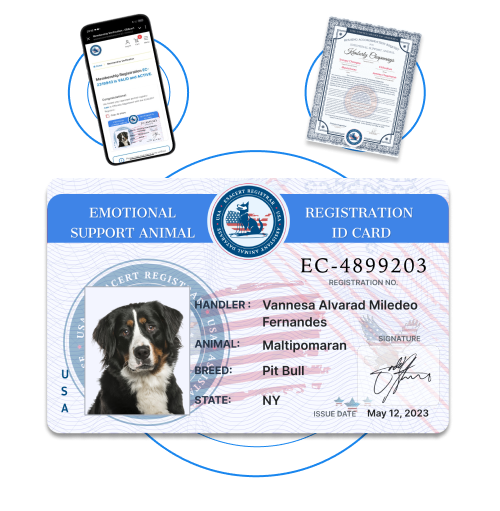
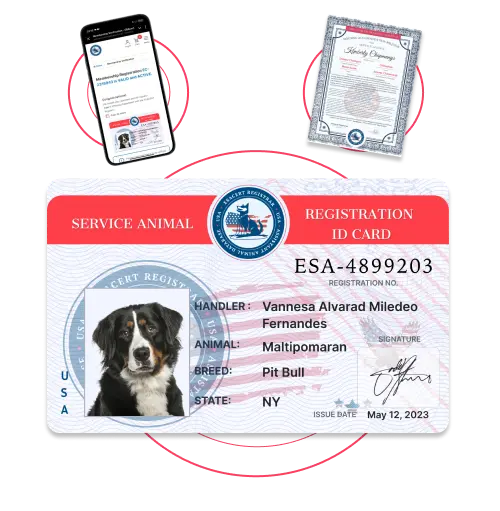
What registration does and does not do: An online registration, certificate or ID card is not proof of ESA status and is not required by law. A Georgia landlord evaluates a reasonable-accommodation request on the strength of a letter from a licensed mental health professional who has actually evaluated you — registration provides identification and quick verification only. Misrepresenting a pet as an assistance animal carries legal consequences for the handler and for anyone who issues false documentation.
A licensed mental health professional must evaluate your need for an emotional support animal in Georgia. Psychiatrists, psychologists, counselors, and licensed clinical social workers can all issue valid ESA letters.
Your mental health provider documents your condition and explains how the ESA reduces your symptoms. This professional assessment forms the foundation of your ESA letter.
Georgia law requires this documentation to confirm your emotional support animal serves a legitimate purpose. The letter carries real legal weight in housing disputes and accommodation requests.
Your provider must have an existing relationship with you. They generally cannot issue letters based on a single online consultation alone.
The ESA letter from your mental health professional must include specific details to hold up legally. Your provider states your diagnosis, confirms you need the animal for emotional support, and describes how the ESA helps you function. The letter also includes the professional’s license number, credentials, and contact information.
Landlords can verify this information directly with your provider. Georgia recognizes only letters from qualified mental health professionals as valid documentation. Fake letters carry serious legal consequences for both the person using them and the provider who issued them.
For state-specific housing questions, start with the Georgia Commission on Equal Opportunity Fair Housing Division. Its housing complaint questionnaire explains jurisdiction and filing requirements. GCEO states that complaints must generally be filed within one year of the alleged discrimination; contact the agency about your circumstances.
Keep your accommodation request, the housing provider’s response and supporting documents together. Our ESA housing resources guide can help you organise the questions to discuss with a qualified professional. An ESA-cert registry entry is an optional private service, not a government housing approval or substitute for clinical documentation.
Understanding Emotional Support Animal Laws in Georgia puts you in a stronger position with landlords, travel providers, and anyone who questions your rights.
Your strongest protections exist in housing. The Fair Housing Act prevents landlords from enforcing no-pet policies against you or denying reasonable accommodation requests without legal justification, though pet-fee waivers are no longer automatic.
Outside of housing, your rights are more limited. Public spaces, workplaces, and air travel all operate under different rules.
Start by getting a valid ESA letter from a licensed mental health professional. Know what your documentation covers, communicate clearly with your housing provider, and understand where your protections begin and end. That’s the most direct path to securing stable housing with your emotional support animal in 2026 and beyond.

Yes — the animal itself is still protected. What changed on 22 May 2026 is ...
Yes — the animal itself is still protected. What changed on 22 May 2026 is federal enforcement of pet-fee waivers, and the answer now depends on your state. Updated with the California Civil Rights Department alert of 20 July 2026.

Most people don't realize that California's "no pets" policies cannot be ...
Most people don't realize that California's "no pets" policies cannot be used to deny an emotional support animal. Emotional Support Animal Laws in California give you real, enforceable rights. If your landlord is refusing your ESA based on a no-pet clause, they may be violating both federal and state law. This guide breaks down what those ...

Renting with an emotional support animal in Virginia can feel uncertain. ...
Renting with an emotional support animal in Virginia can feel uncertain. Many tenants don't know exactly which laws protect them, and not every landlord makes it easy to find out. Virginia's Fair Housing Law is clear: if you have a documented emotional support animal, your landlord must work with you. This guide covers emotional support ...

Are you a renter in North Carolina who needs an animal to help with ...
Are you a renter in North Carolina who needs an animal to help with depression or anxiety but fears pet rules or fees? Emotional Support Animal Laws Nc protect tenants under the Fair Housing Act, stop most pet fees, and ban breed and weight limits; Disability Rights North Carolina can help renters. This post will explain housing rights, how ...

Many Texas renters and workers assume their emotional support animal has ...
Many Texas renters and workers assume their emotional support animal has the same legal standing as a service dog. That assumption creates real problems. Emotional support animals do get solid protection under the Fair Housing Act. But those rights are more limited than most people expect, especially after significant legal changes in ...

If your landlord is pushing back on your emotional support animal, the law ...
If your landlord is pushing back on your emotional support animal, the law is on your side in Colorado. The Fair Housing Act gives tenants strong housing protections for ESAs, but these rights have real limits that many people don't discover until they need them most. Most guides stick to the basics. What they often miss are the places where ESA ...

Your landlord just denied your emotional support animal request. That's a ...
Your landlord just denied your emotional support animal request. That's a frustrating situation, and you deserve a clear picture of where you stand legally. The critical distinction most people miss is this: your ESA is not classified as a pet under federal law. The Fair Housing Act treats your emotional support animal as a reasonable ...

Can You Have More Than One Emotional Support Animal is a common question ...
Can You Have More Than One Emotional Support Animal is a common question for people with anxiety, PTSD, or depression. Federal law, the Fair Housing Act (FHA) and the U.S. Department of Housing and Urban Development let people ask for reasonable accommodation for emotional support animals (ESAs). This post will show how to get an esa letter from ...
Price:
Your current registration:
After change, your registration will be:
Your current registration:
will be replaced with:
You have entered the maximum number of characters
You have entered the maximum number of characters
You have entered the maximum number of characters
You have entered the maximum number of characters
You have entered the maximum number of characters
EC-0000001
Oct 3, 2026
-
-
-
-
-
-
You have entered the maximum number of characters
You have entered the maximum number of characters
You have entered the maximum number of characters
You have entered the maximum number of characters
You have entered the maximum number of characters
You have entered the maximum number of characters
You have entered the maximum number of characters
Enter at least 3 characters to search. You have entered: