(3)
Spend more to get free priority shipping
Great. You will get complimentary priority shipping for free.
Previous registration has been removed from the cart as only one animal registration is allowed at a one time.

Spend more to get free priority shipping
Great. You will get complimentary priority shipping for free.
Previous registration has been removed from the cart as only one animal registration is allowed at a one time.
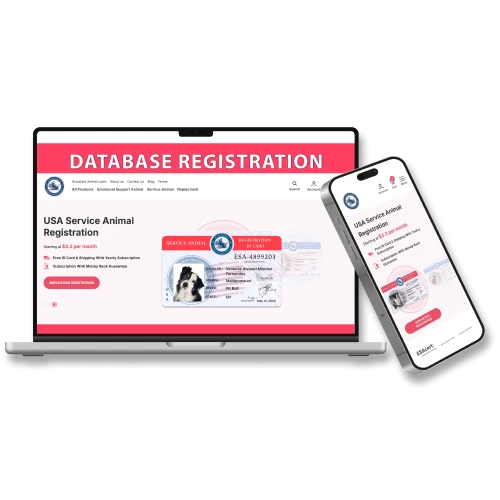
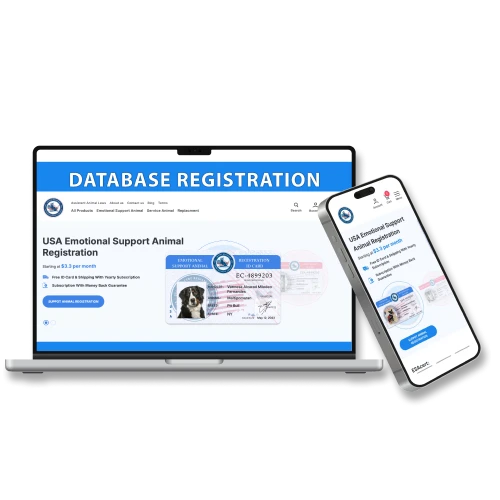
Please note that there is no unified Assistant Animal database registration in the USA.
You cannot verify information from other registrars on the esa-cert.com website

A psychiatric service dog (PSD) is a dog individually trained to perform specific tasks for a person with a mental health disability such as PTSD, panic disorder, major depression or bipolar disorder. Because it is task-trained, a PSD is a service animal under the Americans with Disabilities Act (ADA) and can go with its handler into stores, ...

A psychiatric service dog (PSD) is a dog individually trained to perform specific tasks for a person with a mental health disability such as PTSD, panic disorder, major depression or bipolar disorder. Because it is task-trained, a PSD is a service animal under the Americans with Disabilities Act (ADA) and can go with its handler into stores, restaurants, hotels and other places open to the public.
What separates a PSD from a beloved pet or an emotional support animal is trained work: waking a handler, interrupting a dissociative episode, leading the way to an exit, fetching medication. Below: the legal line between PSDs and ESAs, tasks by condition, who qualifies, training, travel and housing.
A dog counts as a psychiatric service dog when it has been trained to take a specific action that helps with its handler’s psychiatric disability. A dog that helps only by being nearby, however much that helps, is an emotional support animal, not a service animal.
Federal ADA rules define a service animal as a dog individually trained to do work or perform tasks for a person with a disability, and the definition expressly includes psychiatric disabilities. The ADA.gov FAQ uses anxiety as its example: a dog trained to sense that an anxiety attack is coming and take a specific action to help avoid it or lessen its impact qualifies. The same answer draws the line clearly:
“However, if the dog’s mere presence provides comfort, that would not be considered a service animal under the ADA.”
ADA.gov, Frequently Asked Questions about Service Animals and the ADA
Therapy dogs fall outside the definition too. They visit hospitals or schools to comfort many people, but they are not trained to perform tasks for one handler’s disability. Some states and cities do have their own laws on emotional support animals in public places, so local rules are worth checking. For a fuller side-by-side, see service dog vs emotional support animal.
| Psychiatric Service Dog | Emotional Support Animal | |
|---|---|---|
| Trained to perform disability-related tasks | Yes | No |
| ADA public access (stores, restaurants, hotels) | Yes | No (some state or local laws differ) |
| Housing under the Fair Housing Act | Yes; HUD still brings charges for trained animals | FHA still applies, but HUD now pursues charges only for trained animals; private lawsuits and state law remain |
| Air travel (DOT rule) | Yes; airline may require the DOT form | Airlines may treat as a pet |
| Registration or certificate required by law | No | No |
A person qualifies when they have a disability under the ADA and a dog trained to perform tasks directly related to that disability. Under the Department of Justice regulations, disability includes a mental impairment that substantially limits one or more major life activities, such as sleeping, concentrating, thinking, interacting with others or working.
The diagnosis label matters less than its effect on daily life. Conditions that often lead people to a PSD include:
The ADA itself does not require a doctor’s letter, a diagnosis on file or a recommendation from a therapist before a handler can bring a trained dog into public places. Even so, many people work with a mental health professional to understand how their condition affects daily life and whether a dog fits their treatment plan, and housing providers, schools or service dog programs may ask for documentation of their own.
When it is not obvious what a dog does, staff at a business may ask only two questions: is the dog a service animal required because of a disability, and what work or task has the dog been trained to perform. They cannot ask about the diagnosis, require medical documentation or an ID card, or ask the dog to demonstrate a task. For eligibility across physical and psychiatric conditions, read what disabilities qualify for a service dog.
A PSD’s tasks are built around the handler’s specific symptoms, so two PSDs can do very different jobs. The ADA regulations themselves list one category of psychiatric work:
“helping persons with psychiatric and neurological disabilities by preventing or interrupting impulsive or destructive behaviors”
The same definition states that emotional support, well-being, comfort or companionship do not count as work or tasks. Every example below is a trained behavior performed on a cue or in response to a learned signal. A dog can be trained to respond reliably, but no dog can guarantee it will detect every episode, and a PSD supports clinical care rather than replacing it.
PTSD tasks usually target dissociation, hypervigilance and nighttime symptoms. The IAADP list of psychiatric service dog tasks describes several of them:
For panic and anxiety, tasks focus on interrupting an attack early and giving the handler a physical anchor. Some dogs are trained to respond to the handler’s early signs, such as pacing or hand wringing, with a set nudge or paw. Common trained responses include:
For mood disorders and executive-function problems, tasks tend to support routine and safety. The ADA.gov guidance itself gives reminding a person with mental illness to take prescribed medications as an example of service animal work.
Evidence on PSDs is still limited but growing. A 2024 nonrandomized controlled trial of 156 veterans and military members with PTSD, published in JAMA Network Open, compared people who received a service dog with people still on the waiting list, with both groups keeping usual care. After three months, the service dog group had lower PTSD symptom severity, depression and anxiety scores. The authors concluded:
“partnership with a trained psychiatric service dog was associated with lower PTSD symptom severity and higher psychosocial functioning in veterans.”
A 2019 survey of 199 psychiatric assistance dog owners in Australia found that depression was the most reported diagnosis (84%) and tactile stimulation to reduce anxiety the most common task. The results are self-reported, so they describe how teams work rather than prove an effect.
Training a PSD means building three layers that hold up in real life: basic obedience, calm public behavior and disability-related tasks. Federal law sets no hour count, but the International Association of Assistance Dog Partners (IAADP) publishes a widely used minimum:
“a minimum of one hundred twenty (120) hours of training over a period of Six Months or more”
IAADP adds that at least 30 of those hours should go to public outings, and that formal training before six months of age does not count. The minimum is a floor, not a target, and complex tasks can take longer.
Under the ADA, a dog must already be trained before it can be taken into public places as a service animal. Some state and local laws give access to dogs in training, so handlers training in public should check their state’s rules first.
US handlers can get a dog from a service dog organization, work with a private trainer, or train their own dog. All three paths lead to the same legal test: a dog that is trained for the handler’s disability and stays under control.
Practical lesson plans and practice ideas are collected in service animal training resources.
Temperament matters more than breed, and the ADA does not restrict which breeds can be service animals. A good candidate is calm without being shut down, interested in people, neutral toward other animals, resilient to noise and new surfaces, and comfortable being handled by strangers such as veterinary staff. For breed-level guidance, see best service dog breeds for PTSD and anxiety.
A trained PSD can go wherever the public is allowed under ADA Titles II and III, from grocery stores and restaurants to hotels and city buses. Air travel and housing run under separate laws with their own rules.
Public places. The dog must be under the handler’s control and housebroken. Staff may ask the two permitted questions but cannot demand paperwork. If a dog is out of control and the handler does not take effective action, or the dog is not housebroken, staff may ask that the dog be removed, and they must still offer service to the person without the dog.
Air travel. Under the DOT rule in 14 CFR Part 382 (effective January 11, 2021), psychiatric service dogs are treated like other service dogs, while airlines may treat emotional support animals as pets. Airlines may require the DOT Service Animal Air Transportation Form, and for a reservation made more than 48 hours before departure they may ask for it up to 48 hours in advance. On a flight segment scheduled to take 8 hours or more, an airline may also require a relief attestation form stating the dog can relieve itself without creating a sanitation issue. Policies on deadlines and seating still vary, so check the airline’s own service animal page before every trip.
Housing. The Fair Housing Act still requires landlords to make reasonable accommodations for assistance animals. HUD has withdrawn its earlier assistance animal guidance documents (effective September 17, 2025, announced in the Federal Register on April 6, 2026), and a May 22, 2026 enforcement memo says HUD will pursue charges only where the animal is trained to provide disability-related assistance, which a task-trained PSD is. Private lawsuits remain available, and state laws can add protection. Rules on fees, deposits and paperwork differ by state, so a written request and organized records help.
An ID card or vest can make everyday outings smoother by answering a staff member’s unspoken question before it turns into a conversation. Neither one is required, and the ADA.gov FAQ states plainly that online certificates and registrations do not convey any rights under the ADA. A PSD’s status comes from its training and the handler’s disability, and staff can still ask the two questions whatever the dog wears.
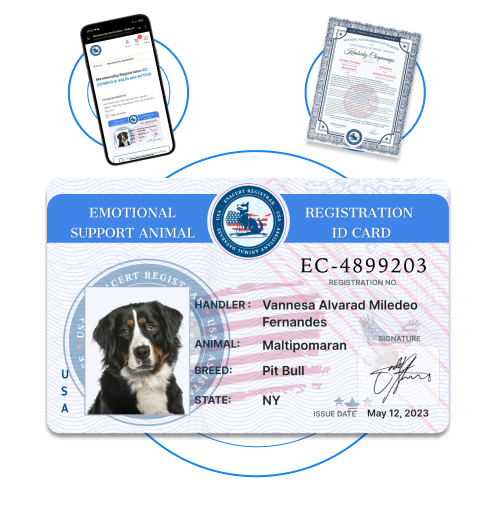
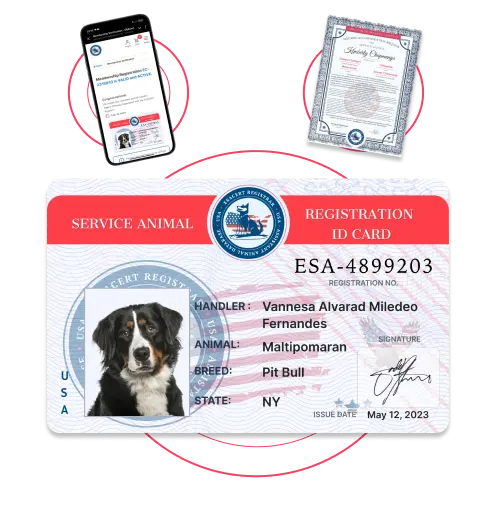
With that in mind, plenty of handlers like carrying something. A voluntary service animal registration keeps the dog’s details and a photo ID card on hand, which is handy when a new employee or a hotel desk clerk is unsure. A well-fitted service dog vest signals that the dog is working and helps keep strangers from petting or distracting it during a task.
A practical next step: write down each task and its cue, keep a simple training log, and practice short, calm answers to the two questions.
Plan for at least six months. The IAADP minimum standard calls for at least 120 hours of training over six months or more, with at least 30 hours in public settings, and formal training before six months of age does not count. Many teams need longer, especially when starting with a puppy or training several complex tasks.
Not for public access under the ADA. Businesses cannot ask about a diagnosis or require medical documentation; they may only ask whether the dog is required because of a disability and what task it is trained to perform. Landlords, schools and service dog programs may ask for documentation under their own rules, so a relationship with a mental health professional is still useful.
Sometimes, yes. In the 2019 Australian survey, a little over half of psychiatric assistance dogs had started out as existing pets. The dog needs a steady temperament, good health and enough focus for public work, so an honest assessment with a qualified trainer before task training saves time.
No. An emotional support dog helps through its presence, while a psychiatric service dog is trained to perform specific tasks for its handler’s disability. Only the PSD has ADA public access rights, and only the PSD is treated as a service animal on flights under the DOT rule.
No. The ADA does not require registration, certification, an ID card or a vest, and online registrations do not create legal rights. Many handlers still choose a vest or ID card as a voluntary convenience that reduces questions and keeps strangers from distracting the dog.

Delta accepts fully trained service dogs in the cabin at no charge, while ...
Delta accepts fully trained service dogs in the cabin at no charge, while emotional support animals travel only under Delta's pet rules. To fly with a service dog, you complete the U.S. DOT Service Animal Air Transportation Form and send it to Delta with a service request, ideally at least 48 hours before departure.

A valid emotional support animal letter is a short document from a licensed ...
A valid emotional support animal letter is a short document from a licensed health care professional who has evaluated you and believes you have a disability-related need for an emotional support animal. A strong letter is personal to you, written on the provider's letterhead, shows how to verify the license, and connects the animal to how your ...
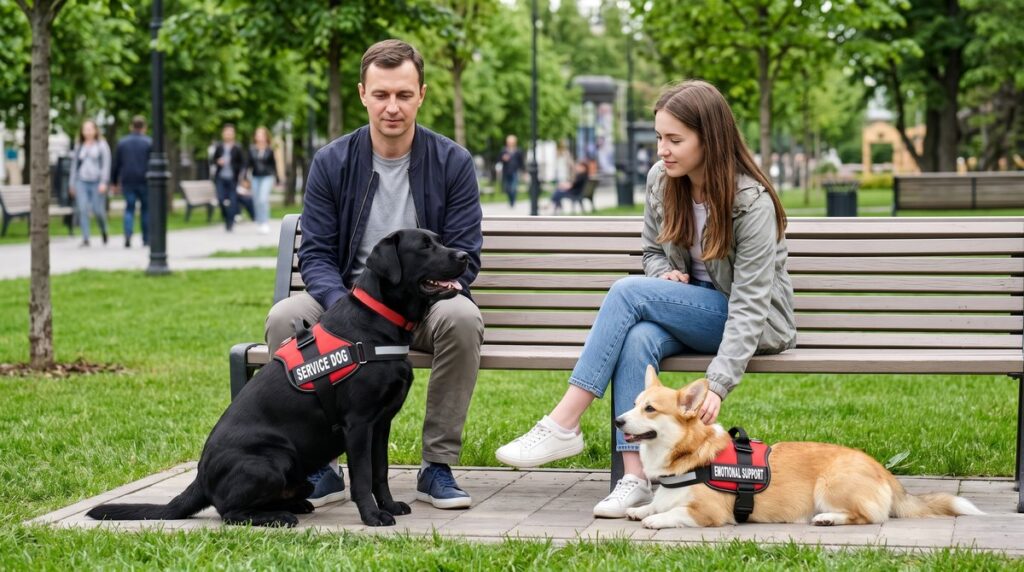
A service dog is individually trained to perform specific tasks for a ...
A service dog is individually trained to perform specific tasks for a person with a disability and can go with its handler into most places open to the public. An emotional support animal (ESA) helps through its presence, is not task-trained, and has no ADA right to enter stores, restaurants, or hotels. A therapy dog visits hospitals, schools, and ...

Yes — the animal itself is still protected. What changed on 22 May 2026 is ...
Yes — the animal itself is still protected. What changed on 22 May 2026 is federal enforcement of pet-fee waivers, and the answer now depends on your state. Updated with the California Civil Rights Department alert of 20 July 2026.

Most people don't realize that California's "no pets" policies cannot be ...
Most people don't realize that California's "no pets" policies cannot be used to deny an emotional support animal. Emotional Support Animal Laws in California give you real, enforceable rights. If your landlord is refusing your ESA based on a no-pet clause, they may be violating both federal and state law. This guide breaks down what those ...


Yes, Virginia protects emotional support animals in housing. The Virginia ...
Yes, Virginia protects emotional support animals in housing. The Virginia Fair Housing Law defines an "assistance animal" to include an animal that provides emotional support for a person's disability (Va. Code § 36-96.1:1), and a separate section, § 36-96.3:1, sets out how a landlord may verify the request and what the tenant pays. Renting with ...

An emotional support animal in Georgia is protected mainly at home: the ...
An emotional support animal in Georgia is protected mainly at home: the federal Fair Housing Act and the Georgia Fair Housing Law (O.C.G.A. § 8-3-200 and following) let you ask a landlord to set aside a no-pets rule as a reasonable accommodation. Outside housing, an ESA has no public access rights, and since July 1, 2026 Georgia law spells that ...

Are you a renter in North Carolina who needs an animal to help with ...
Are you a renter in North Carolina who needs an animal to help with depression or anxiety but fears pet rules or fees? Emotional Support Animal Laws Nc protect tenants under the Fair Housing Act, stop most pet fees, and ban breed and weight limits; Disability Rights North Carolina can help renters. This post will explain housing rights, how ...
Price:
Your current registration:
After change, your registration will be:
Your current registration:
will be replaced with:
You have entered the maximum number of characters
You have entered the maximum number of characters
You have entered the maximum number of characters
You have entered the maximum number of characters
You have entered the maximum number of characters
EC-0000001
Nov 17, 2026
-
-
-
-
-
-
You have entered the maximum number of characters
You have entered the maximum number of characters
You have entered the maximum number of characters
You have entered the maximum number of characters
You have entered the maximum number of characters
You have entered the maximum number of characters
You have entered the maximum number of characters
Enter at least 3 characters to search. You have entered: