


















(3)
Spend more to get free priority shipping
Great. You will get complimentary priority shipping for free.
Previous registration has been removed from the cart as only one animal registration is allowed at a one time.
$97
Spend more to get free priority shipping
Great. You will get complimentary priority shipping for free.
Previous registration has been removed from the cart as only one animal registration is allowed at a one time.
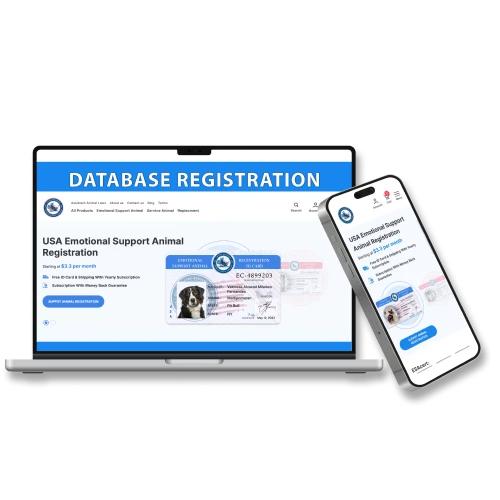
Please note that there is no unified Assistant Animal database registration in the USA.
You cannot verify information from other registrars on the esa-cert.com website

Yes — the animal itself is still protected. What changed on 22 May 2026 is federal enforcement of pet-fee waivers, and the answer now depends on your state. Updated with the California Civil Rights Department alert of 20 July 2026.

Yes — your landlord still has to accept your emotional support animal. What changed on 22 May 2026 is not whether you can keep the animal, but how hard it is to get a pet fee waived at the federal level, and who will enforce that for you.
This page explains what HUD actually did, what it did not do, and how the answer differs depending on which state you live in. It is updated as agencies publish their positions; the last verified change is the California Civil Rights Department alert of 20 July 2026.
HUD narrowed its own enforcement, not the law. In guidance issued on 22 May 2026, HUD’s Office of Fair Housing and Equal Opportunity said it will find reasonable cause on a complaint about a pet-policy waiver only where the animal has been individually trained to perform work or tasks directly related to the complainant’s disability — the standard that applies to service animals under the ADA.
That guidance also permanently rescinded FHEO Notice 2020-01, the document that for years told housing providers they had to waive pet policies for emotional support animals. The earlier withdrawal happened on 17 September 2025; May 2026 made it permanent.
Four things, and they matter more than most coverage suggests.
There is also a narrower point worth knowing: complaints brought under the ADA or Section 504 of the Rehabilitation Act are not affected by the 2026 guidance at all.
It depends on your state, and the honest answer for most people is “not automatically, and not necessarily.”
Federally, a fee waiver is no longer something HUD will enforce for an untrained emotional support animal. You can still request one as a reasonable accommodation, but you now have to show that waiving the fee is necessary because of your disability, rather than relying on a blanket rule.
In some states that federal shift changes nothing, because the state has its own protection that HUD’s guidance does not touch.
California is the clearest case, and so far the only one where a state agency has published an explicit post-rescission position.
On 20 July 2026 the California Civil Rights Department issued Legal Alert CRD 2026-01, stating that the Fair Employment and Housing Act (Gov. Code §§ 12900–12999) and the Unruh Civil Rights Act (Civ. Code § 51(b)) are unaffected by HUD’s guidance, and that reasonable accommodations in California “include, for example, waivers of ‘no-pets’ policies, pet fees, and breed restrictions for assistance animals, including ESAs” (Cal. Code Regs., tit. 2, §§ 12176, 12185).
Elsewhere the picture is less settled. Below is where each state we cover stands, with the agency to ask.
| State | State-law position on fees after May 2026 | Where to ask |
| California | Waiver still required. Confirmed in writing by the state agency. | Civil Rights Department |
| Illinois | 775 ILCS 5/3-104.1 bars an extra charge for a guide, hearing or support dog beyond actual damage — but that section is written for people who are blind or hearing impaired, or who have a physical disability. For an ESA tied to a mental-health condition, the route is the Act’s general accommodation duty. | Department of Human Rights |
| Michigan | MCL 37.1506a(1)(b) requires accommodation, but its wording parallels the federal Act almost word for word — the same language HUD reinterpreted. Unsettled. | Department of Civil Rights |
| Texas | No ESA-specific statute above the federal floor; the Texas Fair Housing Act tracks the FHA. | Texas Workforce Commission, Civil Rights Division |
| Georgia | Fair Housing Law mirrors the FHA and still requires accommodation, including waiving a no-pets policy. | Commission on Equal Opportunity |
| Colorado | Anti-Discrimination Act (C.R.S. § 24-34-502) prohibits disability discrimination and provides for accommodations. | Civil Rights Division |
| Ohio | State civil-rights law requires accommodation; no published post-2026 position. | Ohio Civil Rights Commission |
| North Carolina | State Fair Housing Act requires accommodation; no published post-2026 position. | Human Relations Commission |
| Pennsylvania | Human Relations Act requires accommodation; no published post-2026 position. | Human Relations Commission |
| Virginia | Fair Housing Law requires accommodation; no published post-2026 position. | Virginia Fair Housing Office |
If your state is not listed, the same logic applies: find your state’s fair-housing agency and ask whether it treats the federal change as controlling.
Put it in writing, and make the disability connection explicit. A request that simply says “I have an ESA letter, so no fees apply” is the version that stopped working federally in May 2026.
That written record is what a fair-housing agency looks at before anything else.
Less than the headlines suggest. HUD narrowing its enforcement is not a green light: the underlying statute is unchanged, tenants can sue directly, and in states like California charging the fee is still unlawful. Refusing the animal itself remains a straightforward violation almost everywhere.
The safer reading is that the 2026 guidance changed who will pursue a fee dispute on the tenant’s behalf, not whether the tenant has a case.
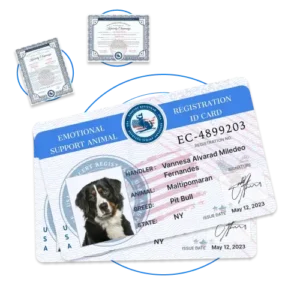
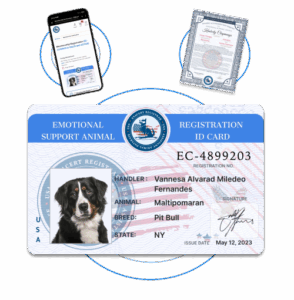
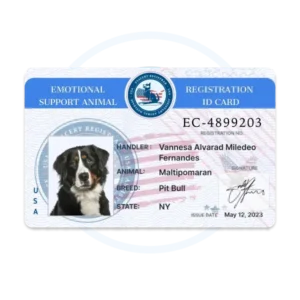
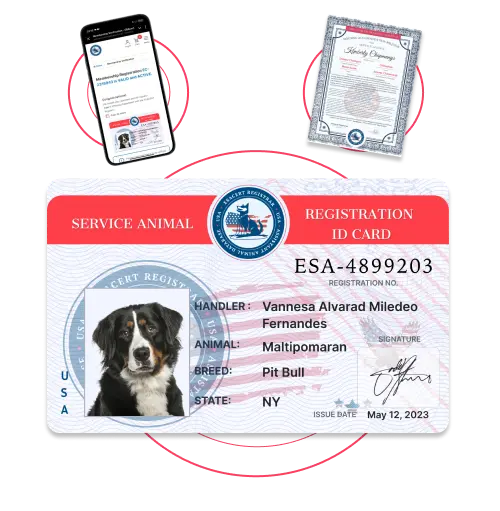
No. Registration is identification and quick verification only. It is not required by law, it is not proof of ESA status, and it has never been what obliges a landlord to accommodate you — that comes from a letter issued by a licensed professional who has actually evaluated you. Nothing HUD did in 2026 changed that, in either direction.
No. The guidance is about pet-policy waivers and how HUD processes complaints. It does not create a ground for eviction, and refusing to accommodate an assistance animal at all remains a fair-housing violation.
Yes, more than before. The letter is what establishes the disability-related need behind your accommodation request. What changed is that the letter alone no longer carries an automatic fee waiver at the federal level.
No. HUD changed which complaints it will pursue. The Fair Housing Act was not amended, no court has excluded ESAs from it, and several states have protections HUD’s guidance does not reach.
Refusing an assistance animal on breed or size grounds is still a refusal of a reasonable accommodation. That question was not part of the 2026 change.
Air travel is governed by a different law and changed years earlier. Under the Department of Transportation’s rule of 11 January 2021, airlines are no longer required to treat emotional support animals as service animals, so most carry them as pets. Only individually trained psychiatric service dogs keep cabin access.
This page is general information, not legal advice. Fair-housing outcomes turn on individual facts, and state agencies may publish new positions — check the agency for your state before acting.

Most people don't realize that California's "no pets" policies cannot be ...
Most people don't realize that California's "no pets" policies cannot be used to deny an emotional support animal. Emotional Support Animal Laws in California give you real, enforceable rights. If your landlord is refusing your ESA based on a no-pet clause, they may be violating both federal and state law. This guide breaks down what those ...


Renting with an emotional support animal in Virginia can feel uncertain. ...
Renting with an emotional support animal in Virginia can feel uncertain. Many tenants don't know exactly which laws protect them, and not every landlord makes it easy to find out. Virginia's Fair Housing Law is clear: if you have a documented emotional support animal, your landlord must work with you. This guide covers emotional support ...

Georgia's emotional support animal laws create genuine confusion, even for ...
Georgia's emotional support animal laws create genuine confusion, even for people who have been through the process before. The rules split across federal and state law. The gap between your housing rights and everything else is bigger than most people realize. Your emotional support animal gets strong protections at home. Public spaces and ...

Are you a renter in North Carolina who needs an animal to help with ...
Are you a renter in North Carolina who needs an animal to help with depression or anxiety but fears pet rules or fees? Emotional Support Animal Laws Nc protect tenants under the Fair Housing Act, stop most pet fees, and ban breed and weight limits; Disability Rights North Carolina can help renters. This post will explain housing rights, how ...

Many Texas renters and workers assume their emotional support animal has ...
Many Texas renters and workers assume their emotional support animal has the same legal standing as a service dog. That assumption creates real problems. Emotional support animals do get solid protection under the Fair Housing Act. But those rights are more limited than most people expect, especially after significant legal changes in ...

If your landlord is pushing back on your emotional support animal, the law ...
If your landlord is pushing back on your emotional support animal, the law is on your side in Colorado. The Fair Housing Act gives tenants strong housing protections for ESAs, but these rights have real limits that many people don't discover until they need them most. Most guides stick to the basics. What they often miss are the places where ESA ...

Your landlord just denied your emotional support animal request. That's a ...
Your landlord just denied your emotional support animal request. That's a frustrating situation, and you deserve a clear picture of where you stand legally. The critical distinction most people miss is this: your ESA is not classified as a pet under federal law. The Fair Housing Act treats your emotional support animal as a reasonable ...

Can You Have More Than One Emotional Support Animal is a common question ...
Can You Have More Than One Emotional Support Animal is a common question for people with anxiety, PTSD, or depression. Federal law, the Fair Housing Act (FHA) and the U.S. Department of Housing and Urban Development let people ask for reasonable accommodation for emotional support animals (ESAs). This post will show how to get an esa letter from ...
Price:
Your current registration:
After change, your registration will be:
Your current registration:
will be replaced with:
You have entered the maximum number of characters
You have entered the maximum number of characters
You have entered the maximum number of characters
You have entered the maximum number of characters
You have entered the maximum number of characters
EC-0000001
Sep 20, 2026
-
-
-
-
-
-
You have entered the maximum number of characters
You have entered the maximum number of characters
You have entered the maximum number of characters
You have entered the maximum number of characters
You have entered the maximum number of characters
You have entered the maximum number of characters
You have entered the maximum number of characters
Enter at least 3 characters to search. You have entered: