(3)
Spend more to get free priority shipping
Great. You will get complimentary priority shipping for free.
Previous registration has been removed from the cart as only one animal registration is allowed at a one time.

Spend more to get free priority shipping
Great. You will get complimentary priority shipping for free.
Previous registration has been removed from the cart as only one animal registration is allowed at a one time.
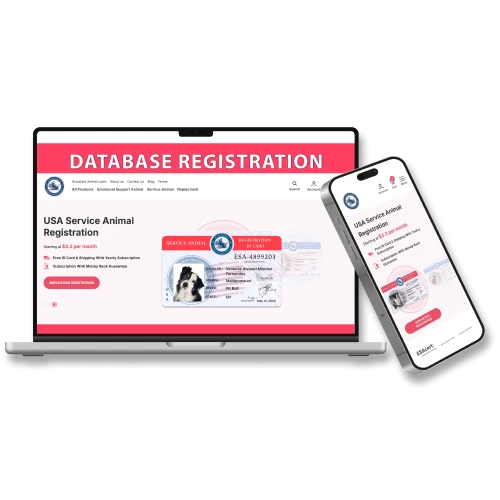
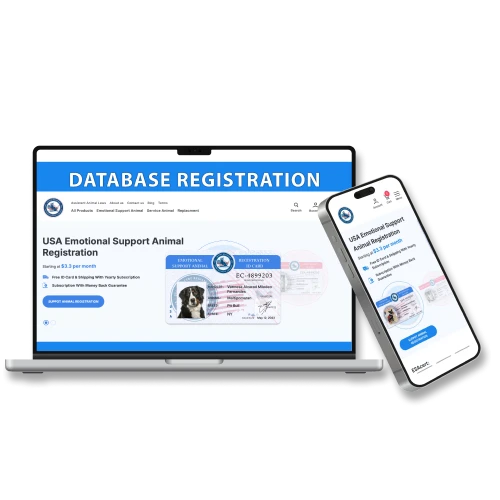
Please note that there is no unified Assistant Animal database registration in the USA.
You cannot verify information from other registrars on the esa-cert.com website

Registering an ESA cat involves getting a valid ESA letter from a licensed mental health professional for housing accommodations. Registration adds a digital record and ID tools that make communication with landlords clearer and more organized.


Yes, a cat can be an emotional support animal (ESA). What makes your cat an ESA is a letter from a licensed mental health or medical professional who has evaluated you and confirmed that the cat helps with a disability-related need; a registration, certificate or ID card is an optional convenience you can add on top of that letter.
Cats make natural support animals for many people: they need no special training and are already used to apartment life. The harder questions come from landlords and airlines, and the rules there changed in 2021 and again in 2025-2026. Below are the steps to make it official, what a landlord can ask, how flying with a cat works now, and what an “emotional support cat certification” really is.
A cat qualifies as an emotional support animal when a licensed professional finds that its presence eases symptoms of your mental or emotional disability. There is no breed, age or size test, and the cat does not need any task training.
Florida’s housing statute gives a clear working definition: an ESA is an animal that does not need training to do work or perform tasks, and that supports a person by its presence, easing one or more symptoms of the person’s disability. Any well-behaved, litter-trained cat can fill that role.
What a cat cannot be is a service animal. Under the Americans with Disabilities Act, service animals are dogs individually trained to do work or perform tasks (with a separate rule for miniature horses), and the federal air travel rules use the same dogs-only approach. If you are weighing a trained dog against a support animal, the differences between a service dog and an emotional support animal explain which rights come with each.
| Situation | Emotional support cat | What you need |
|---|---|---|
| Rental housing with a no-pets rule | You can request an exception as a reasonable accommodation | ESA letter plus a written request to the landlord |
| Pet fees and deposits | Depends on state law and federal case law | Ask in writing for a waiver if you need one |
| Flights | Travels under the airline’s pet policy | Pet reservation, approved carrier, airline pet fee |
| Stores, restaurants, hotels | No ADA access rights; the business’s pet policy applies | Nothing that changes the outcome |
| Public places as a “service animal” | Not possible: only dogs (and miniature horses) qualify | Not applicable |
To make your cat an official ESA, you get evaluated by a licensed professional and receive an ESA letter if they find the cat supports a disability-related need. You then give that letter to your landlord with a reasonable accommodation request.
Be wary of any provider that skips the evaluation. A genuine letter comes from a person who reviewed your situation and holds an active license you can check with your state licensing board.
California Health and Safety Code section 122318 requires a practitioner to have a client-provider relationship of at least 30 days, complete a clinical evaluation, and include their license details before writing documentation for an emotional support dog. The text of the section speaks about dogs only, so it does not directly cover a letter for a cat. If you live in California, ask your clinician how they handle letters for cats.
The federal Fair Housing Act lets you ask a landlord to make an exception to a no-pets rule so you can live with your emotional support cat. The landlord has to consider the request as a reasonable accommodation for a disability, and may refuse only on limited grounds.
It shall be unlawful for any person to refuse to make reasonable accommodations in rules, policies, practices, or services, when such accommodations may be necessary to afford a handicapped person equal opportunity to use and enjoy a dwelling unit, including public and common use areas.
Source: 24 CFR 100.204(a), HUD’s Fair Housing Act regulation.
The statute itself (42 U.S.C. 3604(f)) also says a landlord does not have to rent to someone whose animal would pose a direct threat to others’ health or safety or would cause substantial physical damage to others’ property. For a calm indoor cat, that bar is rarely met.
HUD withdrew its two assistance-animal guidance documents, FHEO-2020-01 and FHEO-2013-01, effective September 17, 2025, and announced the withdrawal in the Federal Register on April 6, 2026. Those documents are no longer authoritative, so much of the advice online that relies on them is out of date.
In an enforcement memo dated May 22, 2026, HUD’s fair housing office said it will find reasonable cause and recommend charges only in cases involving animals trained to provide disability-related assistance. Because an emotional support cat is not task-trained, a HUD complaint is now a weaker route for cat owners. The Fair Housing Act and its regulation still apply, the memo states that private lawsuits are unaffected, and state laws can give more protection. Our explainer on ESA housing rules after HUD’s May 2026 change covers this in more detail.
A landlord may ask for reliable information that supports your disability and your need for the animal when neither is obvious. Your ESA letter is that information. Florida’s statute spells out the limits many tenants want to know:
Other states set their own rules, and with HUD’s guidance withdrawn, state law and court decisions carry more weight. A housing accommodation request form is a convenient way to lay out your request clearly and attach your letter.
Whether a landlord can charge pet rent or a pet deposit for an emotional support cat depends on your state’s law and on federal case law. Florida’s statute says a tenant allowed to keep an ESA may not be required to pay extra compensation for the animal. At the federal level, HUD’s May 2026 memo points to a July 2025 decision in which a federal court in Louisiana held that waiving a generally applicable pet fee for an ESA was neither reasonable nor necessary in that case.
If a fee is a problem for you, ask in writing for a waiver as part of your accommodation request and explain why it matters. Either way, you remain responsible for any damage your cat causes.
Landlords who approve an emotional support cat usually worry about odor, scratched surfaces and allergies, not about the law. Answering those concerns up front, in writing, makes a yes easier and keeps the conversation friendly.
| Concern | What you can offer |
|---|---|
| Litter odor and stains | A covered or high-sided box on a washable mat, daily scooping, a full litter change on a set schedule, and an enzyme cleaner for accidents. |
| Scratched carpet, doors and blinds | Sturdy scratching posts near doors and sofas, regular nail trims, and protective covers on corners. Ask your vet about other options. |
| Spraying or marking | Confirm the cat is spayed or neutered, and talk to your vet early if marking starts. |
| Allergies of neighbors or the next tenant | Keep the cat out of shared hallways and laundry rooms, groom often, run a HEPA air purifier, and offer a professional cleaning at move-out. |
| Escapes and noise | Window screens, a secure carrier for vet visits, and an indoor-only routine. |
| Vaccinations and licensing | Copies of current vaccination records and any local license your city or county requires. |
A short care plan covering these points, attached to your request, shows the landlord you have thought about their property.
Emotional support cats fly as pets. Since the US Department of Transportation’s final rule took effect on January 11, 2021, airlines are not required to recognize emotional support animals as service animals and may treat them as pets.
Animal species other than dogs, emotional support animals, comfort animals, companionship animals, and service animals in training are not service animals for the purposes of this part.
Source: 14 CFR 382.3, DOT Air Carrier Access Act regulation.
In practice, your cat travels under the airline’s own pet policy. Each airline sets its own fees, carrier sizes, limits on how many pets can be on a flight, and routes where pets are allowed. Book the pet reservation early, and confirm the details on the airline’s pet page before you fly. The DOT Service Animal Air Transportation Form is for trained service dogs, so it does not apply to a cat.
An emotional support cat certification or registration is a private record that you choose to create, not a government license. It does not make your cat an ESA; the ESA letter does that, and no federal law requires your cat to be registered.
Florida’s statute puts the limit in plain terms:
An emotional support animal registration of any kind, including, but not limited to, an identification card, patch, certificate, or similar registration obtained from the Internet is not, by itself, sufficient information to reliably establish that a person has a disability or a disability-related need for an emotional support animal.
Source: Florida Statutes section 760.27(3)(c).
The key words are “by itself.” Paired with a valid letter, a registration and ID card do have practical uses:
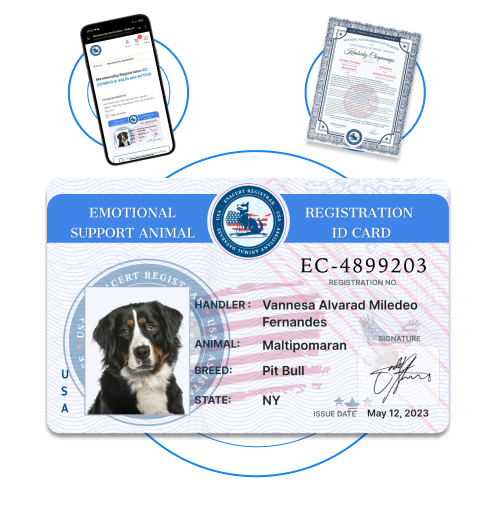
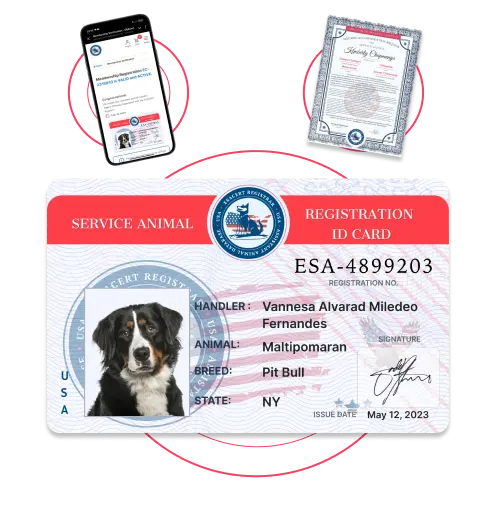
An emotional support animal ID card works this way, and our guide on how ESA registration works in the US walks through the options. A registry is separate from a clinician’s assessment and any housing accommodation request. For optional record keeping, see the ESA registry membership trial: 14 days free, then $6/month, subject to the membership and cancellation terms.
Common myths worth dropping:
Start with the evaluation and the letter, because everything else depends on them. Then write a short accommodation request, attach a simple care plan for litter, scratching and allergies, send it to your landlord before you move in, and keep copies of every message. For trips, plan around your airline’s pet policy rather than ESA rules.
Start with an ESA letter from a licensed mental health or medical professional who has evaluated you. The letter is what qualifies your cat. After that, you can add an optional registration or ID card to keep your documents organized and easy to show.
No, you do not. No federal law requires a certificate, registration or ID card for an emotional support cat, and Florida law says an internet registration by itself does not establish a disability-related need. A certificate can still be a handy companion to your letter.
It depends on where you live. Some states, such as Florida, bar extra charges for an approved ESA, while federal courts have reached different results since HUD withdrew its guidance. Ask in writing for a waiver as part of your request, and remember you are still responsible for any damage.
Usually not. Since January 11, 2021, airlines may treat emotional support animals as pets, so your cat follows the airline’s pet policy, including its fee and carrier rules. Check the airline’s pet page before you book.
Generally, a landlord may ask for reliable information that you have a disability and need the animal, not for your diagnosis. Florida’s statute expressly bars requests for the diagnosis, its severity or medical records. Your ESA letter can confirm the need without naming the condition.

A psychiatric service dog (PSD) is a dog individually trained to perform ...
A psychiatric service dog (PSD) is a dog individually trained to perform specific tasks for a person with a mental health disability such as PTSD, panic disorder, major depression or bipolar disorder. Because it is task-trained, a PSD is a service animal under the Americans with Disabilities Act (ADA) and can go with its handler into stores, ...

Delta accepts fully trained service dogs in the cabin at no charge, while ...
Delta accepts fully trained service dogs in the cabin at no charge, while emotional support animals travel only under Delta's pet rules. To fly with a service dog, you complete the U.S. DOT Service Animal Air Transportation Form and send it to Delta with a service request, ideally at least 48 hours before departure.

A valid emotional support animal letter is a short document from a licensed ...
A valid emotional support animal letter is a short document from a licensed health care professional who has evaluated you and believes you have a disability-related need for an emotional support animal. A strong letter is personal to you, written on the provider's letterhead, shows how to verify the license, and connects the animal to how your ...

A service dog is individually trained to perform specific tasks for a ...
A service dog is individually trained to perform specific tasks for a person with a disability and can go with its handler into most places open to the public. An emotional support animal (ESA) helps through its presence, is not task-trained, and has no ADA right to enter stores, restaurants, or hotels. A therapy dog visits hospitals, schools, and ...

Yes — the animal itself is still protected. What changed on 22 May 2026 is ...
Yes — the animal itself is still protected. What changed on 22 May 2026 is federal enforcement of pet-fee waivers, and the answer now depends on your state. Updated with the California Civil Rights Department alert of 20 July 2026.

Most people don't realize that California's "no pets" policies cannot be ...
Most people don't realize that California's "no pets" policies cannot be used to deny an emotional support animal. Emotional Support Animal Laws in California give you real, enforceable rights. If your landlord is refusing your ESA based on a no-pet clause, they may be violating both federal and state law. This guide breaks down what those ...

Yes, Virginia protects emotional support animals in housing. The Virginia ...
Yes, Virginia protects emotional support animals in housing. The Virginia Fair Housing Law defines an "assistance animal" to include an animal that provides emotional support for a person's disability (Va. Code § 36-96.1:1), and a separate section, § 36-96.3:1, sets out how a landlord may verify the request and what the tenant pays. Renting with ...

An emotional support animal in Georgia is protected mainly at home: the ...
An emotional support animal in Georgia is protected mainly at home: the federal Fair Housing Act and the Georgia Fair Housing Law (O.C.G.A. § 8-3-200 and following) let you ask a landlord to set aside a no-pets rule as a reasonable accommodation. Outside housing, an ESA has no public access rights, and since July 1, 2026 Georgia law spells that ...
Price:
Your current registration:
After change, your registration will be:
Your current registration:
will be replaced with:
You have entered the maximum number of characters
You have entered the maximum number of characters
You have entered the maximum number of characters
You have entered the maximum number of characters
You have entered the maximum number of characters
EC-0000001
Nov 17, 2026
-
-
-
-
-
-
You have entered the maximum number of characters
You have entered the maximum number of characters
You have entered the maximum number of characters
You have entered the maximum number of characters
You have entered the maximum number of characters
You have entered the maximum number of characters
You have entered the maximum number of characters
Enter at least 3 characters to search. You have entered: