(3)
Spend more to get free priority shipping
Great. You will get complimentary priority shipping for free.
Previous registration has been removed from the cart as only one animal registration is allowed at a one time.

Spend more to get free priority shipping
Great. You will get complimentary priority shipping for free.
Previous registration has been removed from the cart as only one animal registration is allowed at a one time.
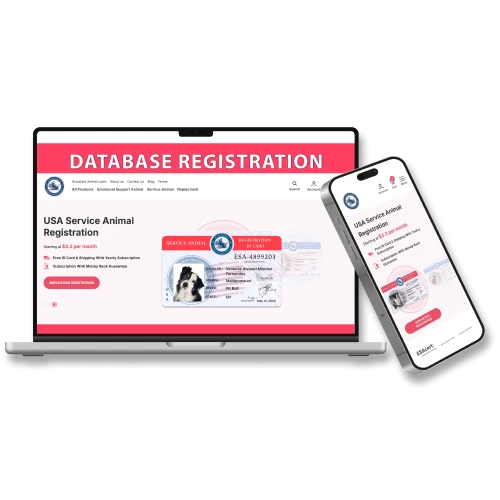
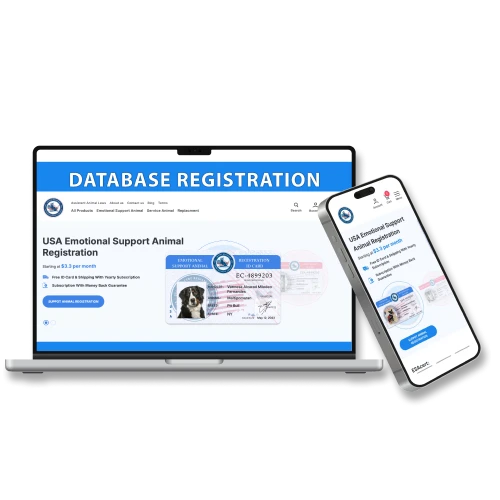
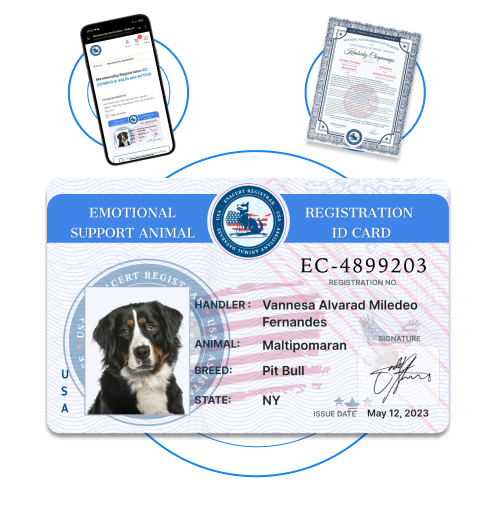
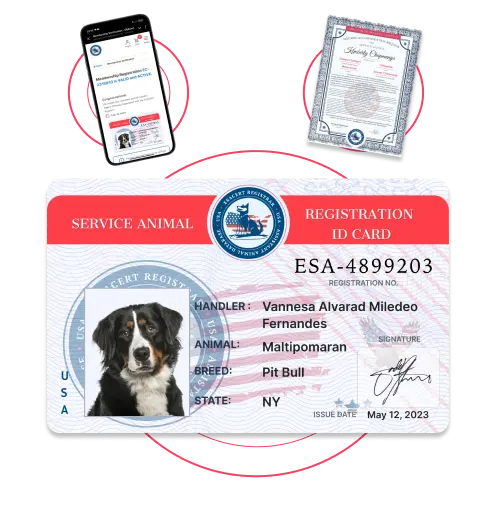
Please note that there is no unified Assistant Animal database registration in the USA.
You cannot verify information from other registrars on the esa-cert.com website

Licensed mental health professionals assess your needs, determine ESA eligibility, and issue housing-compliant ESA letters. Working with the right provider ensures valid documentation and smoother communication with landlords.


An ESA letter is only as good as the professional who writes it. The fastest legitimate route is usually the provider who already treats you: your therapist, psychiatrist, or primary care doctor. If you do not have one, you can find a licensed professional through a therapist directory, your insurance network, a community clinic, or a telehealth service, as long as the provider is licensed in your state and actually evaluates you. This guide shows where to look, how to check a license in a few minutes, and which state rules can change the timeline.
A housing provider who receives an accommodation request is looking for reliable information from someone with personal knowledge of your condition. In practice, that means a licensed professional acting within the scope of their license. The most common choices are:
The professional evaluates whether you have a condition that substantially limits a major life activity and whether the animal helps with it. If both are true, they can describe that need in a letter. They do not have to list every detail of your diagnosis.
One distinction matters before you start. Emotional support animals are not service animals under the Americans with Disabilities Act. As the U.S. Department of Justice puts it: “Because they have not been trained to perform a specific job or task, they do not qualify as service animals under the ADA.” An ESA letter is a housing document. If your dog is individually trained to perform tasks related to a disability, you are dealing with service dog rules instead.
If you see a therapist, psychiatrist, or primary care doctor, ask them first. They already know your history, so the letter carries more weight than one from a stranger, and many providers will write it as part of regular care. If they decline, our guide on what to do when your therapist won’t write an ESA letter covers your options.
Online care is a legitimate way to get an evaluation when the provider is licensed in your state and actually assesses you through a video or phone session. It is especially useful if you live far from a clinic or cannot take time off for in-person visits. What matters is the evaluation, not the format: a provider you meet by video who learns your history is a stronger source than a form you fill out and never discuss with anyone.
Checking a license takes about five minutes and protects you from paying for a letter a landlord can reject.
Some states regulate who can document a need for an emotional support animal and how. California is the clearest example. Under Health and Safety Code §122318, effective January 1, 2022, a health care practitioner who provides documentation for an emotional support dog must:
The 30 days do not require a set number of appointments. California’s Board of Behavioral Sciences explains that the law “does not prescribe a specified number of meetings.” An exception to the 30-day rule exists for people who are verified as homeless.
Other states have their own rules, and housing protections for emotional support animals have shifted since HUD withdrew its earlier assistance animal guidance. Our overview of the 2026 HUD changes explains what still applies and how state law fills the gaps.
For a step-by-step walkthrough of the appointment itself, see how to get an emotional support animal letter from a doctor.
Send your housing provider a written reasonable accommodation request and attach the letter. Keep copies of everything you send and receive, along with dates. Our housing accommodation request gives you a prepared form to submit with your letter, and you can keep your letter, ID, and supporting documents together with our ESA paperwork.
Finding a provider can take time. If you are struggling in the meantime, you can call or text 988, or chat at 988lifeline.org, to reach the 988 Suicide & Crisis Lifeline. The Lifeline says it “is available 24/7/365.”
Yes, if they are licensed, treat you for the condition the animal helps with, and are comfortable assessing that need. Many people start with their primary care doctor, who may also refer them to a mental health professional.
Yes, when the provider is licensed in your state and evaluates you in a real session. In California, the provider must also have a client-provider relationship with you for at least 30 days before issuing the documentation.
It varies. If you already see a therapist, the letter may be part of your regular visits, which insurance can cover. Standalone telehealth evaluations charge their own fees. Compare what the price includes: a real evaluation by a licensed provider matters more than speed.
No. Emotional support animals are not service animals under the ADA, so businesses do not have to admit them. Since January 11, 2021, U.S. Department of Transportation rules allow airlines to treat emotional support animals as pets rather than service animals.
Ask why. Some providers do not write letters as a policy, while others may not think the animal addresses your condition. You can ask for a referral or see another licensed provider for an evaluation. Our guide on what to do when a therapist won’t write an ESA letter walks through the options.

A psychiatric service dog (PSD) is a dog individually trained to perform ...
A psychiatric service dog (PSD) is a dog individually trained to perform specific tasks for a person with a mental health disability such as PTSD, panic disorder, major depression or bipolar disorder. Because it is task-trained, a PSD is a service animal under the Americans with Disabilities Act (ADA) and can go with its handler into stores, ...

Delta accepts fully trained service dogs in the cabin at no charge, while ...
Delta accepts fully trained service dogs in the cabin at no charge, while emotional support animals travel only under Delta's pet rules. To fly with a service dog, you complete the U.S. DOT Service Animal Air Transportation Form and send it to Delta with a service request, ideally at least 48 hours before departure.

A valid emotional support animal letter is a short document from a licensed ...
A valid emotional support animal letter is a short document from a licensed health care professional who has evaluated you and believes you have a disability-related need for an emotional support animal. A strong letter is personal to you, written on the provider's letterhead, shows how to verify the license, and connects the animal to how your ...

A service dog is individually trained to perform specific tasks for a ...
A service dog is individually trained to perform specific tasks for a person with a disability and can go with its handler into most places open to the public. An emotional support animal (ESA) helps through its presence, is not task-trained, and has no ADA right to enter stores, restaurants, or hotels. A therapy dog visits hospitals, schools, and ...

Yes — the animal itself is still protected. What changed on 22 May 2026 is ...
Yes — the animal itself is still protected. What changed on 22 May 2026 is federal enforcement of pet-fee waivers, and the answer now depends on your state. Updated with the California Civil Rights Department alert of 20 July 2026.

Most people don't realize that California's "no pets" policies cannot be ...
Most people don't realize that California's "no pets" policies cannot be used to deny an emotional support animal. Emotional Support Animal Laws in California give you real, enforceable rights. If your landlord is refusing your ESA based on a no-pet clause, they may be violating both federal and state law. This guide breaks down what those ...

Yes, Virginia protects emotional support animals in housing. The Virginia ...
Yes, Virginia protects emotional support animals in housing. The Virginia Fair Housing Law defines an "assistance animal" to include an animal that provides emotional support for a person's disability (Va. Code § 36-96.1:1), and a separate section, § 36-96.3:1, sets out how a landlord may verify the request and what the tenant pays. Renting with ...

An emotional support animal in Georgia is protected mainly at home: the ...
An emotional support animal in Georgia is protected mainly at home: the federal Fair Housing Act and the Georgia Fair Housing Law (O.C.G.A. § 8-3-200 and following) let you ask a landlord to set aside a no-pets rule as a reasonable accommodation. Outside housing, an ESA has no public access rights, and since July 1, 2026 Georgia law spells that ...
Price:
Your current registration:
After change, your registration will be:
Your current registration:
will be replaced with:
You have entered the maximum number of characters
You have entered the maximum number of characters
You have entered the maximum number of characters
You have entered the maximum number of characters
You have entered the maximum number of characters
EC-0000001
Nov 17, 2026
-
-
-
-
-
-
You have entered the maximum number of characters
You have entered the maximum number of characters
You have entered the maximum number of characters
You have entered the maximum number of characters
You have entered the maximum number of characters
You have entered the maximum number of characters
You have entered the maximum number of characters
Enter at least 3 characters to search. You have entered: