






(3)
Spend more to get free priority shipping
Great. You will get complimentary priority shipping for free.
Previous registration has been removed from the cart as only one animal registration is allowed at a one time.
$97
Spend more to get free priority shipping
Great. You will get complimentary priority shipping for free.
Previous registration has been removed from the cart as only one animal registration is allowed at a one time.
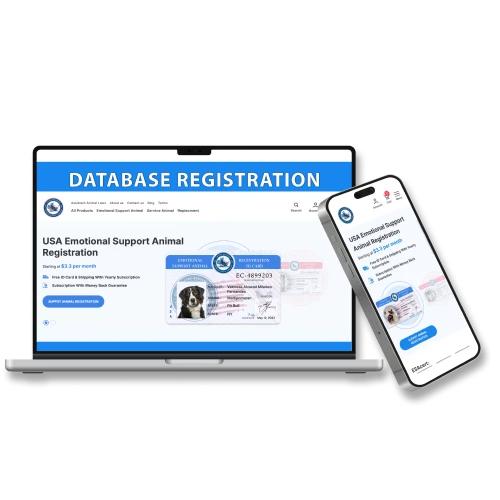
Please note that there is no unified Assistant Animal database registration in the USA.
You cannot verify information from other registrars on the esa-cert.com website
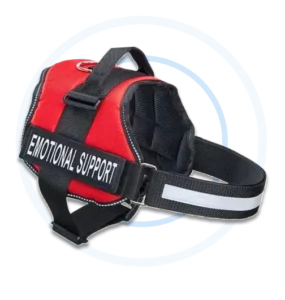
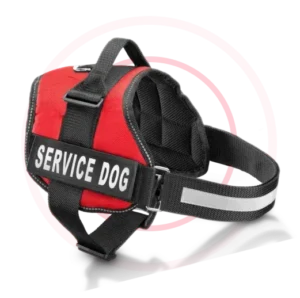
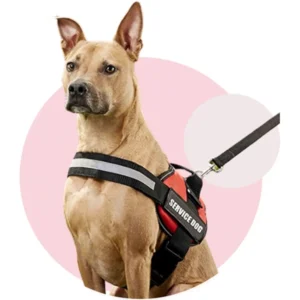
A service dog vest gives your trained companion clear identification in public, letting people know at a glance that your dog is on the job – not a pet looking for attention. Whether you need help with mobility, are browsing for a lightweight option suited to warm weather, or want something professional enough for travel, the right vest keeps your dog comfortable, your hands in control, and everyday interactions smoother. Below you’ll find a breakdown of the main styles, what features actually matter, and how to choose the vest that fits your handler–dog team best.
The right vest matches your dog’s body, your working needs, and the environments you enter together. Start with an accurate girth measurement, decide how much control and visibility you need, then pick the style that lets your dog work comfortably all day. A well-fitted service dog vest signals to the public that the dog is working and not a pet – making every outing a little easier for both of you. Browse the collection to find the option that fits your team.
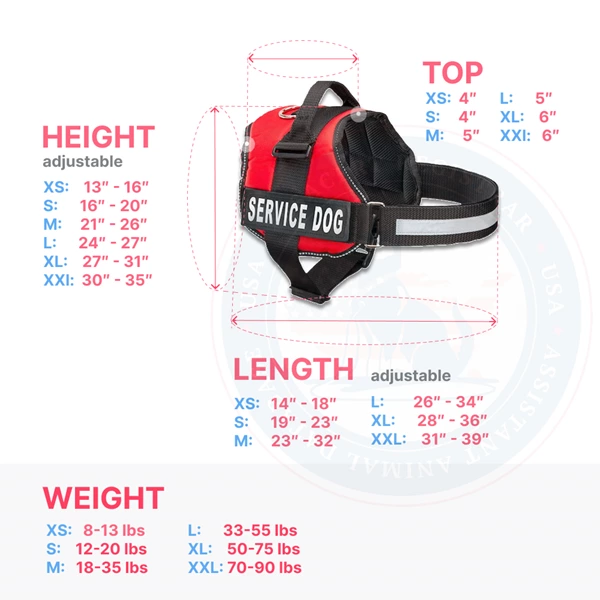
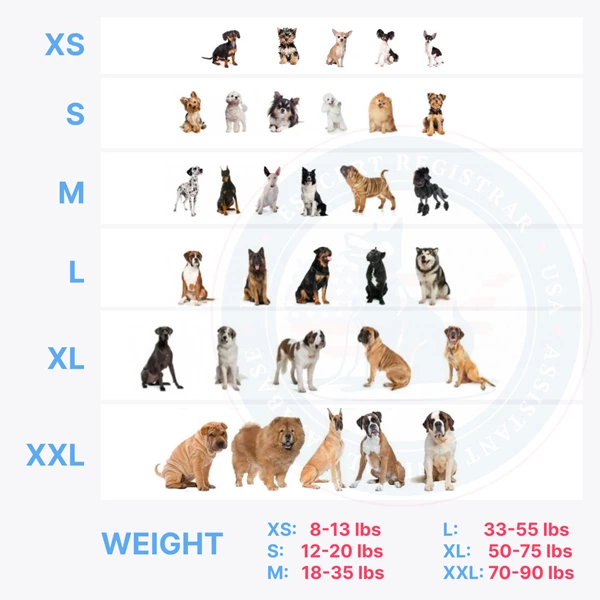
| Size | Height (cm / ”) | Top (cm / ”) | Length (cm / ”) | Weight (kg / lbs) | Image |
|---|---|---|---|---|---|
| XS | 36-46 cm / 14.2-18.1” | 10 cm / 3.9” | 34-40 cm / 13.4-15.7” | 3.5-6 kg / 7.7-13.2 lbs |  |
| S | 48-60 cm / 18.9-23.6” | 11 cm / 4.3” | 42-50 cm / 16.5-19.7” | 5.5-9 kg / 12.1-19.8 lbs | |
| M | 58-82 cm / 22.8-32.3” | 13 cm / 5.1” | 54-66 cm / 21.3-26.0” | 8-16 kg / 17.6-35.2 lbs | |
| L | 66-88 cm / 26.0-34.6” | 14 cm / 5.5” | 62-70 cm / 24.4-27.6” | 15-25 kg / 33.1-55.1 lbs | |
| XL | 72-92 cm / 28.3-36.2” | 15 cm / 5.9” | 68-80 cm / 26.8-31.5” | 23-34 kg / 50.7-74.8 lbs | |
| XXL | 80-100 cm / 31.5-39.4” | 16 cm / 6.3” | 76-90 cm / 29.9-35.4” | 32-41 kg / 70.5-90.4 lbs |
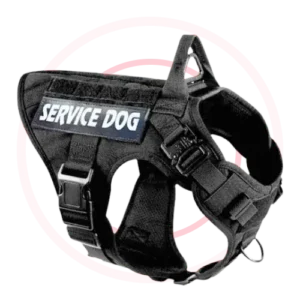
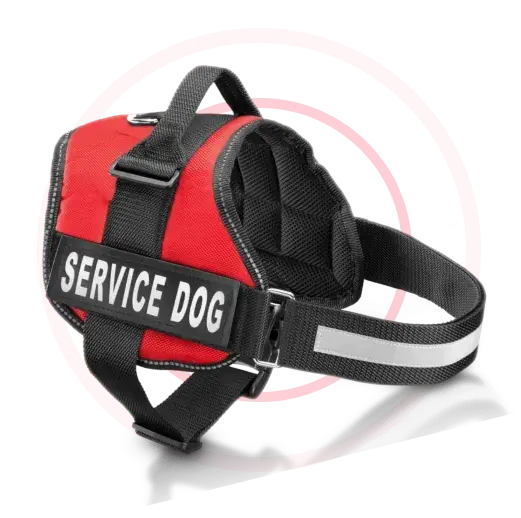
Since this design and color are widely accepted (though not mandatory) for service dogs, we only offer the vest in this color.
USPS First Class: 2-6 business days.
Priority Mail: 1-4 business days.
Expedited Shipping: up to 2 business days.
As a registrar, we are not primarily focused on selling accessories, and a 25% restocking fee applies to any returns.
As a seller, we provide a 12-month warranty on the durability of the product.
Service dog vests fall into four broad categories, each designed around a different balance of control, comfort, and visibility. Active Dogs offers over 65 styles of service dog vests, so understanding the differences helps you narrow the range quickly.
Padded harness vests combine a structured body panel with harness-style straps, using closed-cell foam or air-mesh padding to distribute pressure across the chest and girth. They’re ideal for handlers who need close physical control – particularly for mobility assistance, balance work, or guiding tasks. Larger dogs and breeds that perform pulling or stability work benefit most, because the padding helps prevent rubbing during daily use. A padded vest is also a solid pick for cooler climates where extra coverage won’t cause overheating.
Made from breathable nylon or polyester mesh, these vests keep airflow high and weight low. Mesh vests are best for hot climates, while tactical vests feature MOLLE systems for gear attachment – so if your dog works primarily in warm conditions and doesn’t need heavy control hardware, a mesh design makes the most sense. The trade-off is less structural support: you won’t find rigid handles or load-bearing attachment points on most mesh options.
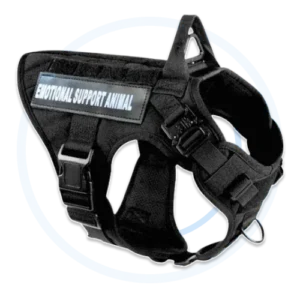
Built from durable fabric like ballistic-weight polyester or nylon, tactical vests include reinforced stitching, solid side panels, and often MOLLE-compatible webbing for adding pockets or gear. Handlers in demanding environments – veterans, first responders, search-and-rescue teams – find these vests match the professional appearance and durability their work requires. The materials resist abrasion and hold up over long periods, though added bulk means you should check your dog’s comfort and motion regularly.
A cape vest drapes loosely over the dog’s back with minimal straps underneath. Because it offers simple identification without heavy control features, this style suits well-trained dogs whose tasks don’t involve pulling or lifting. Cape vests are easy to slip on and off, making them a practical option for handlers who are interested primarily in clear identification during public outings. Classic service dog vests in this style are available for €44.95.
Essential features to look for when choosing a service dog vest include comfort, safety, and durability – but what those terms mean in practice depends on the vest’s construction.
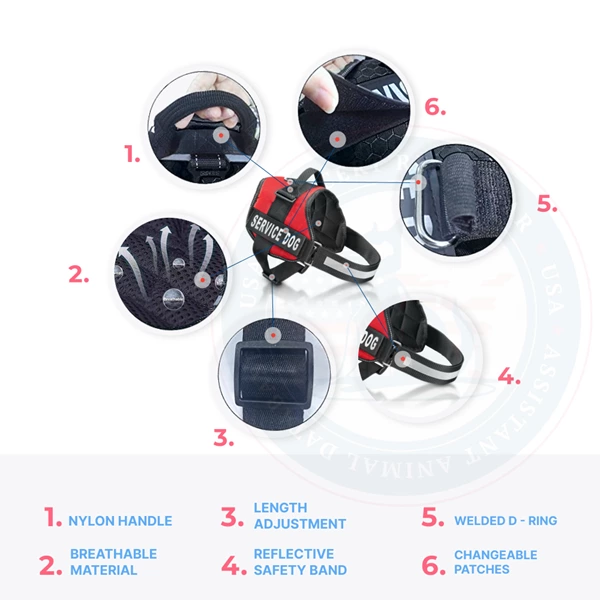
Breathable material is crucial for keeping the dog comfortable in warm climates. Look for mesh panels or open-side designs on vests intended for summer use. For year-round or heavy-duty wear, ballistic nylon or Cordura fabrics offer the best long-term durability without sacrificing too much airflow. Padding at contact points – chest plate, girth strap – matters more than padding everywhere; it prevents hot spots and chafing during extended wear.
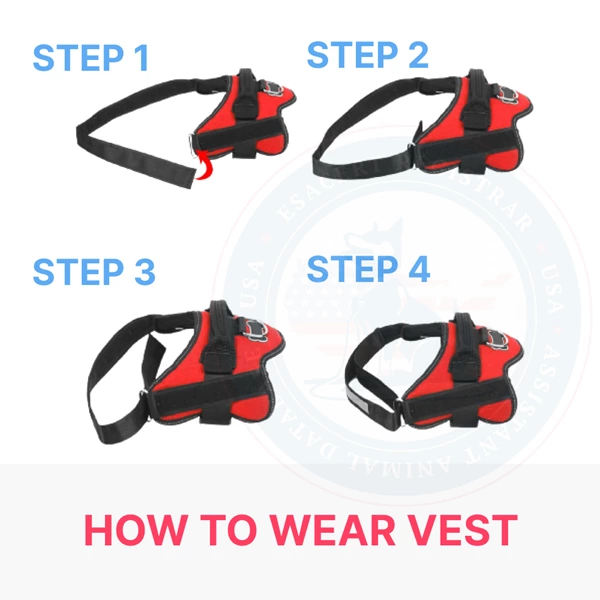
Proper sizing involves measuring chest girth, neck, and back length. Measure around the widest part of the rib cage, just behind the front legs, with the dog standing. Adjustable straps are important for a snug fit that doesn’t restrict movement, and heavy-duty quick-release buckles ensure the vest stays secure without making it difficult to remove. Use a sizing chart to select the appropriate size; if your dog falls between two sizes, go with the larger one.
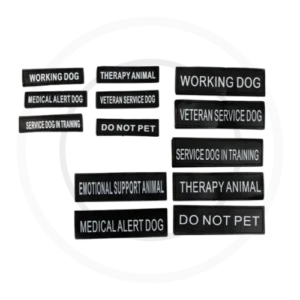
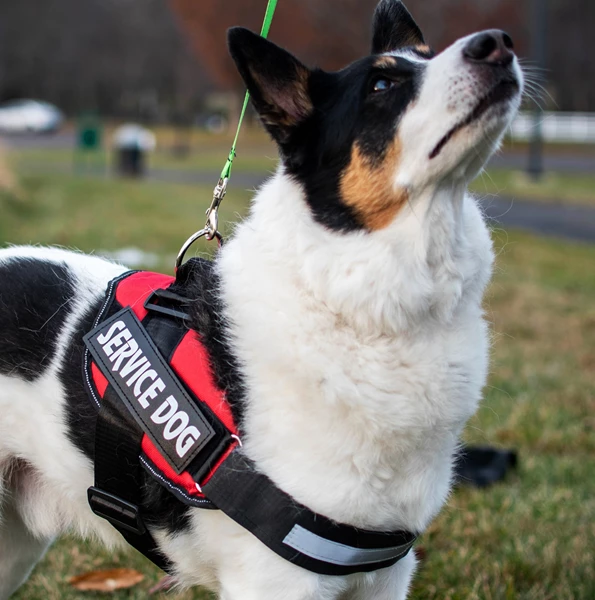
Many vests come with patches that provide useful information about the dog’s role – “SERVICE DOG,” “DO NOT PET,” or task-specific text. Velcro panels allow for interchangeable patches for identification, so you can swap messages depending on the situation. Reflective trim enhances safety in low-light environments, and contrasting color choices (red, blue, orange) add visibility during the day. No particular color or text is mandated by law, but the vest should make it clear that the dog is working to prevent public interruptions.
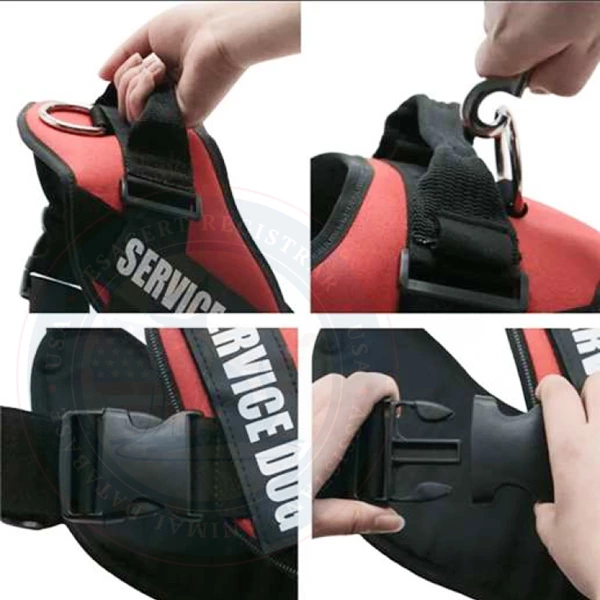
Handles placed along the spine give handlers leverage for balance or guidance work without pressing on the dog’s shoulders. Welded D-rings are preferred for leash attachment over stamped ones – welded rings hold up under sustained load and won’t bend open over time. Front-clip D rings can discourage pulling, while back-clip placement suits dogs that walk calmly on a loose lead. Avoid stacking too much hardware in one area; excess weight at a single point can alter the dog’s natural motion and reduce comfort over a long working day.
Turning features into a decision comes down to four criteria:
Dog’s size and body type – Deep-chested breeds (Goldens, Labs, Shepherds) often need wider panels and a different girth-to-length ratio than narrow-framed dogs. Start with the chest measurement, then check customer reviews for breed-specific feedback. Service dog vests come in sizes from XX-Small to X-Large, so most dogs can find an option that fits.
Handler’s task requirements – A handler who needs the dog to perform mobility or balance work should choose a padded or tactical vest with a rigid handle. Handlers who only need clear identification in public can keep things simple with a cape or mesh design.
Climate and activity level – Hot-weather teams should prioritize mesh materials and minimal coverage. Cold or rough-terrain handlers can add coverage and durability without worrying as much about overheating. A vest helps the dog stay focused on its tasks during public outings, so pick one your dog can wear comfortably for the full working day.
Professional context – Some workplaces or travel situations call for a polished, uniform look. Tactical vests tend to read as “official” and may reduce questions in professional settings. Cape-style vests are lower-profile, suiting handlers who prefer a quieter appearance.
Legal information on this page reflects federal law as published by the agencies below. Rules can change and state or local law may add protections — check the current text of each source.
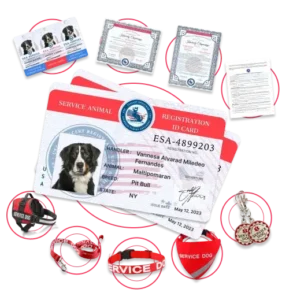
$159
Include 1 year subscription;$50/year thereafter
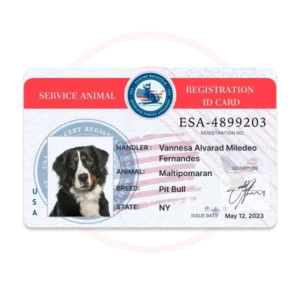
Original price was: $22.$20Current price is: $20.
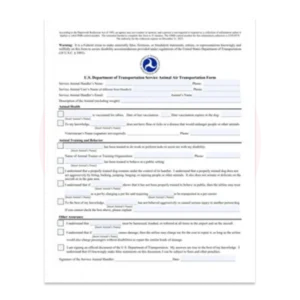
Price range: $15 through $25
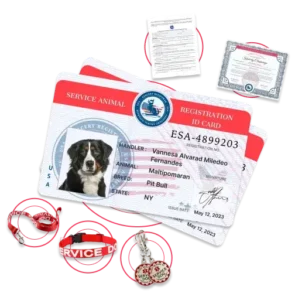
$115
Include 1 year subscription;$50/year thereafter
$199
Include 1 year subscription;$50/year thereafter
Service dog vests are not legally required by the Americans with Disabilities Act. Under the ADA, staff may only ask two questions – whether the dog is required because of a disability and what task it has been trained to perform. They cannot demand documentation or a vest. That said, a vest reduces unwanted interactions by informing the public not to distract the dog, making daily access smoother in practice. The dog’s status as a service animal depends on its training, not on wearing a vest.
Only trained dogs can be service animals – a service dog must be individually trained to perform a specific task for a disabled handler. Service dogs have public access rights under ADA law. Emotional support animals provide comfort through companionship but are not task-trained and have no ADA public-access right; their recognized legal protection applies mainly to housing under the Fair Housing Act. Misrepresenting a pet as a service dog is illegal. A vest on either animal is a convenience for identification, not a legal credential.
Stand your dog on a flat surface and wrap a flexible tape measure around the widest part of the rib cage, just behind the front legs – this gives you the chest girth, which is the primary measurement. Also note the neck circumference and back length from the base of the neck to the base of the tail. Compare your numbers to the manufacturer’s sizing chart. If your dog is between sizes, order the next size up and use the adjustable straps to dial in the fit.
Most vests include Velcro (hook-and-loop) panels that accept removable patches. You can swap between “Service Dog,” “Do Not Pet,” “In Training,” or task-specific text whenever you need to. No federal law mandates any specific patch wording, so choose whatever text communicates your dog’s role most clearly. Some handlers add embroidered patches for a more permanent look.
Care depends on materials. Mesh vests can usually be machine-washed on a gentle cycle with mild detergent and air-dried. Tactical or padded nylon vests hold up best with hand washing or a gentle machine cycle – avoid high heat, which can warp buckles and degrade stitching. Check all hardware (buckles, D rings, Velcro) after each wash and replace any component that shows wear. Air-dry completely before storing to prevent mildew, especially if the vest includes cooling inserts.
Measure around your dog’s chest, just behind the front legs, and compare it to our size chart. For a secure fit, choose a size that allows for slight adjustability.
Price range: $60 through $75
Price range: $10 through $11
Original price was: $24.$19Current price is: $19.
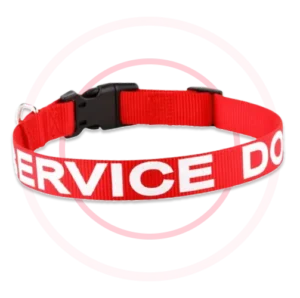
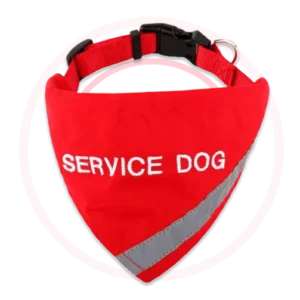
Original price was: $21.$19Current price is: $19.
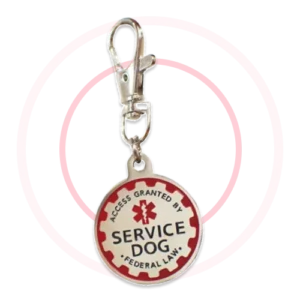
Original price was: $15.$9Current price is: $9.
Price:
Your current registration:
After change, your registration will be:
Your current registration:
will be replaced with:
You have entered the maximum number of characters
You have entered the maximum number of characters
You have entered the maximum number of characters
You have entered the maximum number of characters
You have entered the maximum number of characters
EC-0000001
Aug 18, 2026
-
-
-
-
-
-
You have entered the maximum number of characters
You have entered the maximum number of characters
You have entered the maximum number of characters
You have entered the maximum number of characters
You have entered the maximum number of characters
You have entered the maximum number of characters
You have entered the maximum number of characters
Enter at least 3 characters to search. You have entered:
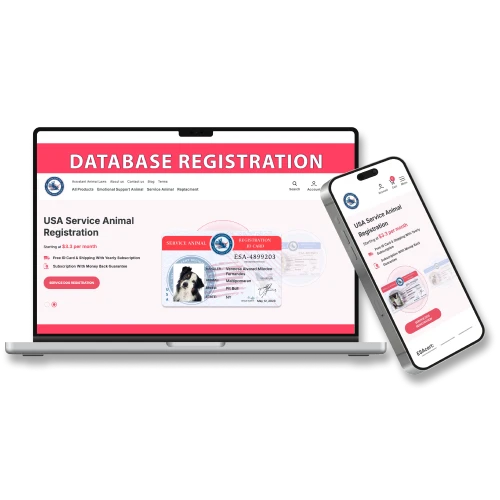
Jorge Caro
|The information and details
Margarita Garza
|Margaret Young
|Michael Carter
|Material, Shipping, Price