

















(3)
Spend more to get free priority shipping
Great. You will get complimentary priority shipping for free.
Previous registration has been removed from the cart as only one animal registration is allowed at a one time.
$97
Spend more to get free priority shipping
Great. You will get complimentary priority shipping for free.
Previous registration has been removed from the cart as only one animal registration is allowed at a one time.
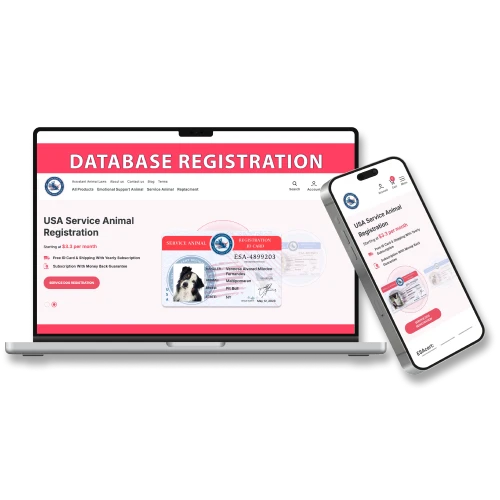
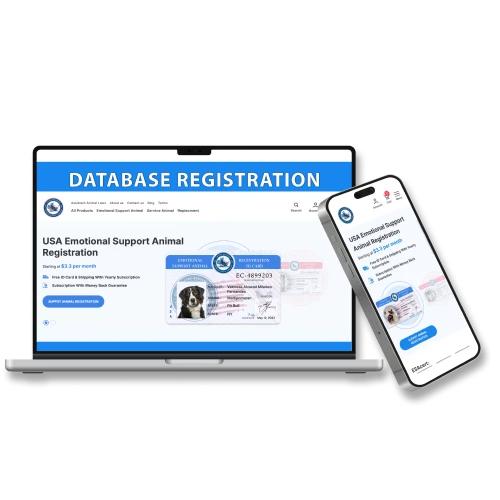
Please note that there is no unified Assistant Animal database registration in the USA.
You cannot verify information from other registrars on the esa-cert.com website

Many Texas renters and workers assume their emotional support animal has the same legal standing as a service dog. That assumption creates real problems. Emotional support animals do get solid protection under the Fair Housing Act. But those rights are more limited than most people expect, especially after significant legal changes in ...


Many Texas renters and workers assume their emotional support animal has the same legal standing as a service dog. That assumption creates real problems.
Emotional support animals do get solid protection under the Fair Housing Act. But those rights are more limited than most people expect, especially after significant legal changes in 2025.
The legal ground shifted.
This guide covers emotional support animal laws in Texas for 2026. You’ll see exactly what housing rights you have, how workplace accommodations actually work, what flying with an ESA costs now, and what documentation you need to stay protected.
Understanding the differences between emotional support animals and service animals is crucial in Texas. These two categories serve different purposes and carry very different legal protections.
| Aspect | Service Animals | Emotional Support Animals |
|---|---|---|
| Primary Purpose | Perform specific trained tasks for people with disabilities | Provide comfort through companionship and presence |
| Training Requirements | Require extensive professional training; usually 18 to 24 months | No specific training mandate under federal law |
| Legal Definition | Defined by the Americans with Disabilities Act; must assist with disabilities | Protected under the Fair Housing Act and Air Carrier Access Act |
| Public Access Rights | Access most public spaces where pets are typically banned | Limited to housing; treated as regular pets on airlines with no general public access |
| Documentation Needed | No official documentation required; handler certification exists | Require valid ESA letter from licensed mental health professional |
| Animal Types | Dogs predominate; miniature horses qualify in some cases | Any domesticated animal can qualify; cats, rabbits, birds included |
| Behavior Standards | Must be under handler control; aggressive behavior results in removal | Should remain calm; disruptive conduct may forfeit protections |
| Housing Protection | Protected under Fair Housing Act with accommodation rights | Protected under Fair Housing Act; breed and size restrictions do not apply |
Service animals go through rigorous training that takes years to complete. These animals learn to detect seizures, retrieve items, or guide people with visual impairments.
Emotional support animals work differently. They provide psychological relief through companionship and presence alone. No task training is required.
Texas law recognizes both categories under different statutes. Service animals fall under the Americans with Disabilities Act, which applies nationwide. Emotional support animals receive protection primarily through federal housing laws.
Public access differs significantly between the two. Service dogs enter restaurants, stores, and offices with their handlers. Emotional support animals cannot access these public venues, regardless of their importance to their owners.
An ESA letter carries real legal weight in housing disputes. Licensed therapists, psychiatrists, and counselors issue these documents. Service animals require no official letter. Their training speaks for itself.
Training programs for service animals often cost between $15,000 and $30,000 per animal. Emotional support companions include rabbits, birds, and even reptiles in some situations. Both categories deserve respect and legal recognition in Texas communities.
Texas law gives ESA owners real protections in housing, work, and travel situations. These rules come from the Fair Housing Act, the Americans with Disabilities Act, and Texas state codes that protect people with disabilities and their assistance animals.
The Fair Housing Act protects you if you own an emotional support animal in rental homes or apartments across the country, including cities like Houston, Austin, Fort Worth, and San Antonio.
Landlords cannot refuse to rent to you just because you have an ESA. They must allow your animal in housing units even if they have no-pet policies. This is a strong, federally backed right.
The pet fee question is more complicated than it used to be. According to the landmark August 2025 federal court ruling in Henderson v. Five Properties LLC, landlords are no longer automatically required to waive pet fees or deposits for ESA owners. Tenants now need to show that the fee waiver itself is a necessary part of the accommodation. HUD also withdrew its blanket fee-waiver guidance in September 2025. If you are a Texas renter, be prepared to make that case clearly and in writing.
The U.S. Department of Justice enforces housing discrimination rules to protect people with disabilities from unfair denials. You need a legitimate ESA letter from a licensed mental health professional to show your animal provides support for conditions like depression, anxiety, or PTSD.
Your ESA letter must come from a qualified mental health provider who has a real, ongoing relationship with you. Licensed counselors at places like the Texas Counseling Center or the Accessibility Resource Center at UT Dallas can issue these letters. Your letter should clearly cover three key points:
Your landlord can ask for documentation, but they cannot demand your full medical records or ask detailed questions about your diagnosis. Property owners must follow the Texas Property Code and the Code of Federal Regulations when handling ESA requests.
The Texas Fair Housing Act works alongside federal law to give you additional protection in the state. Disability Rights Texas and the U.S. Office of Fair Housing and Equal Opportunity can step in if your landlord violates your rights.
Fair housing protections ensure that people with disabilities receive equal access to housing without facing discrimination or unfair charges.
The employment picture for ESA owners is more nuanced than many people realize. Based on 2026 employment law guidance regarding ADA Title I, employers are not automatically required to allow emotional support animals in the workplace. An ESA at work is treated as a potential accommodation, evaluated case by case. An employer can legally deny the request if allowing the animal would cause undue hardship to the business.
You still have the right to request a workplace accommodation. Your employer cannot discriminate against you for having an emotional support animal. They can, however, ask for documentation from a licensed mental health professional to verify your need.
Stress, anxiety, loneliness, and other mental health conditions can qualify for these protections under Texas human resources code guidelines. Knowing how the process works gives you a better chance of a successful outcome.
Employers in Texas must engage in an interactive process with you to explore accommodations. Here is what that process typically looks like:
Your ESA does not need special training or an ESA harness to be considered for workplace accommodation. Vaccination records and ongoing pet care remain your responsibility throughout. Documentation from a qualified mental health professional carries far more weight than any online registration service when making your case to an employer.
Air travel with an ESA changed significantly when the Air Carrier Access Act was updated. Airlines no longer classify ESAs as service animals. This shift has real financial consequences for Texas travelers.
According to 2026 travel policy data from major U.S. carriers, most airlines now treat emotional support animals as regular pets. That means in-cabin pet fees, which generally range from $95 to $200 each way. Call your airline directly before you book to confirm their current policy and fee structure.
Your ESA must stay calm and must not disturb other passengers during the flight. Each airline sets its own rules, so confirming the specifics with your carrier in advance is essential.
Ground travel in Texas follows different standards than air travel. You cannot take your ESA into restaurants, stores, or other public spaces where pets are not allowed. ESAs simply do not have the legal access rights that service animals hold under the ADA National Network guidelines.
A few practical ground and lodging travel points to keep in mind:
Your ESA letter proves your need for the animal. It does not grant public access the way a service dog certification does.
Getting a real ESA letter in Texas requires working with a licensed mental health professional who understands Texas health and safety code requirements. Online platforms can connect you with qualified providers, but the depth of your clinical relationship matters just as much as the paperwork itself.
A licensed mental health professional must write your ESA letter. Texas law requires specific information in this document to protect your rights in housing and beyond.
Only licensed mental health professionals can issue valid ESA letters in Texas. Your doctor, therapist, psychiatrist, or counselor must hold an active license in the state.
These professionals evaluate your mental health condition and determine if an ESA would genuinely help you. Online platforms exist that connect you with licensed providers for ESA registration online. These services can speed up the process, but your provider must have a real clinical relationship with you before issuing any letter.
They cannot write a letter based on a single conversation or without a proper evaluation. As highlighted by recent Texas legislative initiatives like House Bill 5206, providers who issue letters without establishing a genuine patient relationship could face fines up to $1,000 for misrepresenting an animal’s status. That level of scrutiny means the bar for a legitimate letter is higher than ever, and any provider who rushes the process is a red flag.
Resources like Pettable Academy help people understand how to find qualified professionals and what to look for in a provider. Your provider should clearly explain their credentials and their experience with emotional support animals. Texas law requires that only qualified mental health experts complete this important task.
ESA owners carry real duties that shape how their animals must act in both public and private spaces. Knowing these responsibilities protects your rights and keeps your housing status secure.
Emotional support animals and service dogs differ in one critical way: access rights. Unlike service animals trained to perform specific tasks, emotional support animals do not have the same legal right to enter public spaces.
Texas law and federal regulations set clear limits. Under the Texas Health and Safety Code (Section 437.023), food establishments are legally required to restrict animal access to trained service animals only. This means Texas restaurants must deny entry to emotional support animals to comply with state health codes. This is a state law, not just a business preference.
Other public spaces follow the same general pattern. Grocery stores, retail shops, hospitals, schools, and government buildings can all refuse ESA entry without violating your rights.
Here is a quick summary of where ESAs are and are not allowed in Texas:
| Location | ESA Allowed? | Notes |
|---|---|---|
| Rental housing | Yes | Protected under the Fair Housing Act |
| Restaurants and food establishments | No | Texas Health and Safety Code Section 437.023 applies |
| Retail stores | No | Businesses can legally refuse entry |
| Airlines (cabin) | Pet fee required | Treated as regular pet; fees range from $95 to $200 each way in 2026 |
| Personal vehicle | Yes | No special permission needed |
| Hospitals and government buildings | Generally no | Special permission required |
Your responsibilities as an owner include respecting these boundaries and accepting business decisions without conflict. You must keep your animal under control at all times in allowed spaces. Aggressive behavior or property damage can put your housing rights at serious risk.
Documentation from a licensed mental health professional strengthens your position during any disputes. The Nolo legal resource center offers guidance on your rights and obligations as an ESA owner in Texas. Owners who follow these rules protect their animals from liability issues and preserve the credibility of legitimate emotional support animals statewide.
Your emotional support animal must follow basic rules in housing and shared spaces. You carry full responsibility for your animal’s actions at all times.
Texas ESA laws give you real, meaningful protection for your emotional support animal. Your housing rights are grounded in federal law, and knowing the correct documentation requirements puts you in a strong position.
The legal landscape shifted in 2025, particularly around pet fee waivers and employer accommodations. Staying current on those changes keeps you from making demands that your rights may not actually support.
Getting a valid letter from a licensed mental health professional matters more than ever in 2026. Organizations like the Accessibility Resource Center and Disability Rights Texas can help you find the right support and get the process right.
In Texas, emotional support animals are protected under the federal Fair Housing Act, which requires landlords to allow them as reasonable accommodations, even in no-pet housing. You must provide a letter from a licensed mental health professional confirming your need.
A landlord can deny an emotional support animal if it poses a direct threat to the health or safety of others, or would cause substantial physical damage to the property. Each request must be evaluated individually under Fair Housing Act standards.
Students should contact their school’s accessibility resource center for assistance with emotional support animal accommodations. This office helps you gather the necessary documentation and works with campus housing to process your request.
You need a letter from a licensed mental health professional, such as a psychologist, psychiatrist, or licensed clinical social worker. The letter must confirm you have a disability and describe how the emotional support animal provides therapeutic support related to your condition. Your school’s accessibility resource center can assist you with this documentation process.

If your landlord is pushing back on your emotional support animal, the law ...
If your landlord is pushing back on your emotional support animal, the law is on your side in Colorado. The Fair Housing Act gives tenants strong housing protections for ESAs, but these rights have real limits that many people don't discover until they need them most. Most guides stick to the basics. What they often miss are the places where ESA ...

Your landlord just denied your emotional support animal request. That's a ...
Your landlord just denied your emotional support animal request. That's a frustrating situation, and you deserve a clear picture of where you stand legally. The critical distinction most people miss is this: your ESA is not classified as a pet under federal law. The Fair Housing Act treats your emotional support animal as a reasonable ...

Can You Have More Than One Emotional Support Animal is a common question ...
Can You Have More Than One Emotional Support Animal is a common question for people with anxiety, PTSD, or depression. Federal law, the Fair Housing Act (FHA) and the U.S. Department of Housing and Urban Development let people ask for reasonable accommodation for emotional support animals (ESAs). This post will show how to get an esa letter from ...

Are you a renter trying to keep emotional support animals but your landlord ...
Are you a renter trying to keep emotional support animals but your landlord says no? Ohio Emotional Support Animal Laws protect tenants with disabilities under the federal Fair Housing Act. This post explains what an ESA letter from licensed mental health professionals must say, the landlord rights and limits on pet fees and breed rules, and how ...

Most Illinois renters are surprised to learn that a landlord's "no pets" ...
Most Illinois renters are surprised to learn that a landlord's "no pets" rule doesn't automatically apply to emotional support animals. That's one of the most commonly misunderstood areas of housing law in the state. The rules are clear, but they come with specific conditions that matter. Knowing those conditions is what separates a renter ...

If you rely on an animal for mental health support, navigating housing and ...
If you rely on an animal for mental health support, navigating housing and public access rules can feel overwhelming. Under Colorado ESA laws and federal regulations, individuals with a valid Emotional Support Animal letter have specific rights that protect them from discrimination. Whether you are facing a strict no-pet policy in your apartment ...

Many renters and landlords feel confused about Michigan Emotional Support ...
Many renters and landlords feel confused about Michigan Emotional Support Animal Laws. These laws protect tenants with an emotional support animal under the Fair Housing Act. This guide will explain your rights, what documents you need, and how to meet legal requirements easily. Find out what every tenant and landlord in Michigan should know ...

Are you worried your landlord will not allow your pet because of a strict ...
Are you worried your landlord will not allow your pet because of a strict "no-pet" rule in your building? Finding housing can be a stressful experience, especially when you rely on an animal for emotional or mental support. Fortunately, under Pennsylvania and federal laws, the Fair Housing Act gives special rights to people with emotional support ...
Price:
Your current registration:
After change, your registration will be:
Your current registration:
will be replaced with:
You have entered the maximum number of characters
You have entered the maximum number of characters
You have entered the maximum number of characters
You have entered the maximum number of characters
You have entered the maximum number of characters
EC-0000001
Apr 10, 2026
-
-
-
-
-
-
You have entered the maximum number of characters
You have entered the maximum number of characters
You have entered the maximum number of characters
You have entered the maximum number of characters
You have entered the maximum number of characters
You have entered the maximum number of characters
You have entered the maximum number of characters
Enter at least 3 characters to search. You have entered: