





















(3)
Spend more to get free priority shipping
Great. You will get complimentary priority shipping for free.
Previous registration has been removed from the cart as only one animal registration is allowed at a one time.
$97
Spend more to get free priority shipping
Great. You will get complimentary priority shipping for free.
Previous registration has been removed from the cart as only one animal registration is allowed at a one time.
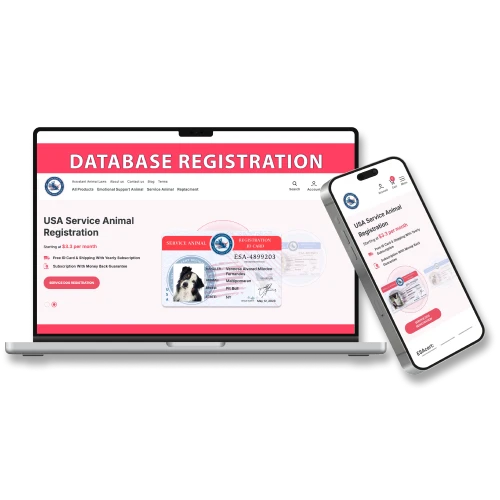
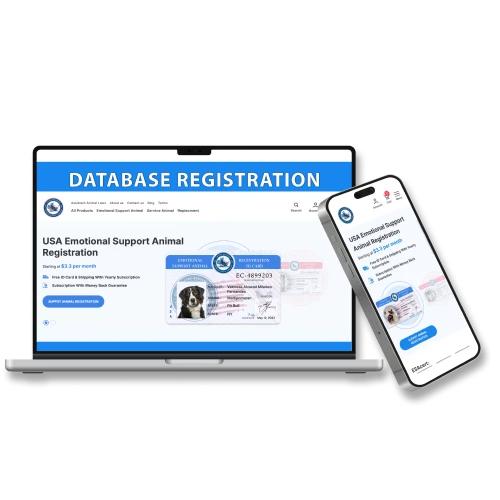
Please note that there is no unified Assistant Animal database registration in the USA.
You cannot verify information from other registrars on the esa-cert.com website

Can You Have More Than One Emotional Support Animal is a common question for people with anxiety, PTSD, or depression. Federal law, the Fair Housing Act (FHA) and the U.S. Department of Housing and Urban Development let people ask for reasonable accommodation for emotional support animals (ESAs). This post will show how to get an esa letter from ...

Can You Have More Than One Emotional Support Animal is a common question for people with anxiety, PTSD, or depression. Federal law, the Fair Housing Act (FHA) and the U.S. Department of Housing and Urban Development let people ask for reasonable accommodation for emotional support animals (ESAs).
This post will show how to get an esa letter from a licensed mental health professional and how landlords and housing providers may verify multiple ESAs. Keep reading to learn the steps.
The law allows people to have more than one emotional support animal (ESA). But you need a letter from a licensed mental health professional for each ESA.
Federal fair housing rules do not set a fixed cap on how many emotional support animals you can have. Housing providers must offer reasonable accommodations for disability-related needs under fair housing laws.
Americans with Disabilities Act treats service animals differently and it does not cover ESAs.
Policies vary by airline and housing provider.
Landlords and property managers can ask for ESA verification, such as an ESA letter from a licensed health professional or LMHP. Airlines follow the air carrier access act (acaa) rules that now let carriers treat many ESAs as pets.
Some condos and landlords use pet screening or pet management software like ourpetpolicy to track requests. State rules, such as the florida fair housing act and section 760.27 of the florida statutes, often mirror federal fair housing laws.
Each ESA needs a clear clinical justification. A licensed mental health professional must link the animal to the person’s disability. The clinician often cites the Diagnostic and Statistical Manual of Mental Disorders for diagnoses such as panic disorder.
Telehealth providers can do evaluations and write letters in many states. The Americans with Disabilities Act (ADA) treats service dogs differently than emotional service animals, and residents should note that difference.
Documentation should state how each emotional service animal eases symptoms and helps daily life. Some owners use one letter that names multiple pets. Others get separate letters for each animal.
Resources like Pettable Academy explain filing steps. Authors and advocates like Grant Fiddes, Marvy Beckman, Sep Niakan, and Logan Miller outline evaluation steps and the role of psychiatric service dog assessments.
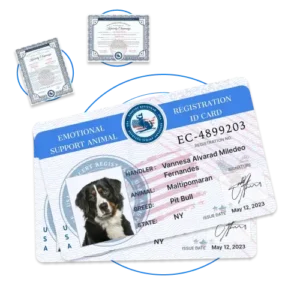
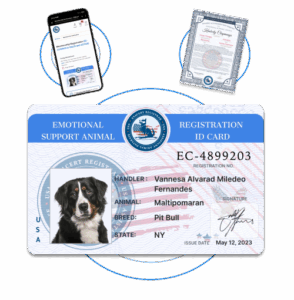
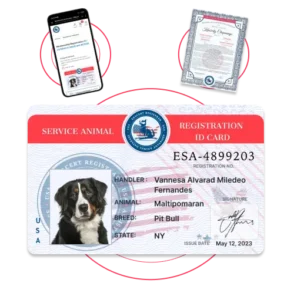
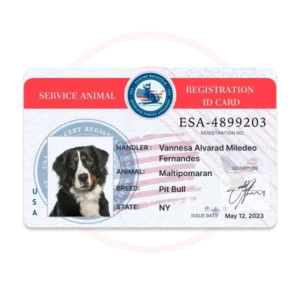
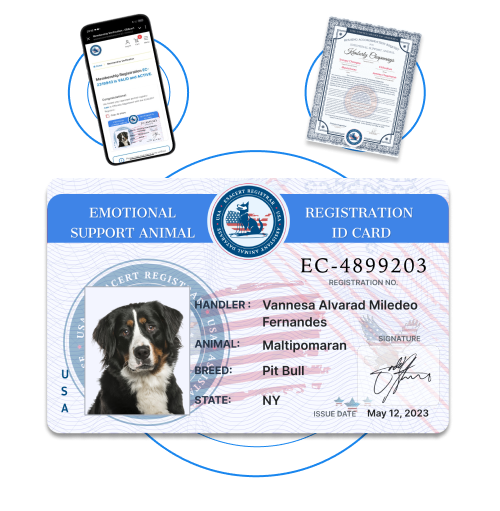
Already have an ESA letter? Register online to get your ESA ID Card. Next, review the verification process and the documents needed for multiple emotional support animals.
To have more than one emotional support animal, you need proper paperwork for each one. A licensed therapist must sign off on the need for every animal based on your mental health conditions.
You must keep separate documents for each emotional support animal. Each record must prove the need tied to mental health conditions.
Licensed mental health professionals play a key role in the process of obtaining emotional support animals (ESAs). They assess your mental health needs and can recommend multiple ESAs if necessary.
A professional can help you understand how each animal supports your well-being.
These experts provide documentation for each ESA. This paperwork is important for landlords or other authorities. It proves that you need these animals to help with emotional challenges.
Their support makes it easier to manage both your needs and the care required for each animal.
When you have more than one emotional support animal, think about your living space. Will it fit all of them? Also, consider if you can take care of each one properly. Each pet needs love and attention daily.
Here are housing points to weigh.
| Know your rights under the Fair Housing Act and HUD guidance. |
| Check housing provider policies and lease language on pets and assistance animals. |
| Assess space limits in apartments and shared hallways. |
| Talk with your housing provider about a reasonable accommodation request. |
| Count costs for food, vet care, and extra fees if allowed. |
| Plan care schedules to limit noise and odor. |
| Document each animal with a support letter from a licensed clinician. |
| Consider public housing rules and local ordinances. |
| Use a support letter template or HUD forms to organize paperwork. |
Caring for multiple emotional support animals (ESAs) takes time and effort. Each ESA has its own needs, from food to exercise. Owners must ensure that they meet these needs daily. Proper care helps the animals thrive.
Managing more than one ESA requires good planning. It is vital to set a routine for feeding, walking, and training each animal. This routine keeps the owner organized and supports the pets’ well-being.
Also, consider space in your home when bringing in more ESAs; they need room to live comfortably.
Having more than one emotional support animal is possible. Laws do allow it, but you need to meet certain rules. Each animal must have its own reasons for support. You will also need proper documents for each pet from a licensed mental health professional.
Think about your living space and if you can care for multiple animals. It requires extra responsibility and planning. If you are ready for the challenge, many people find joy in having more than one furry friend by their side.
Yes, you can ask for more than one emotional support animal. Rules vary by housing and airline. Many landlords may grant a reasonable accommodation under the Fair Housing Act if you have proper documentation.
Yes. Get an ESA letter from a qualified mental health professional for each animal. Landlords may ask for clear documentation to approve more than one ESA.
Not if you have proper papers and the request is reasonable. A landlord can refuse if the animals cause safety risks or an undue burden. Communicate early and provide the needed documents.
No. Emotional support animals provide comfort. Service animals perform specific tasks for a disability. Service animals have different legal protections than ESAs.

Are you a renter trying to keep emotional support animals but your landlord ...
Are you a renter trying to keep emotional support animals but your landlord says no? Ohio Emotional Support Animal Laws protect tenants with disabilities under the federal Fair Housing Act. This post explains what an ESA letter from licensed mental health professionals must say, the landlord rights and limits on pet fees and breed rules, and how ...


Most Illinois renters are surprised to learn that a landlord's "no pets" ...
Most Illinois renters are surprised to learn that a landlord's "no pets" rule doesn't automatically apply to emotional support animals. That's one of the most commonly misunderstood areas of housing law in the state. The rules are clear, but they come with specific conditions that matter. Knowing those conditions is what separates a renter ...

If you rely on an animal for mental health support, navigating housing and ...
If you rely on an animal for mental health support, navigating housing and public access rules can feel overwhelming. Under Colorado ESA laws and federal regulations, individuals with a valid Emotional Support Animal letter have specific rights that protect them from discrimination. Whether you are facing a strict no-pet policy in your apartment ...

Many renters and landlords feel confused about Michigan Emotional Support ...
Many renters and landlords feel confused about Michigan Emotional Support Animal Laws. These laws protect tenants with an emotional support animal under the Fair Housing Act. This guide will explain your rights, what documents you need, and how to meet legal requirements easily. Find out what every tenant and landlord in Michigan should know ...

Are you worried your landlord will not allow your pet because of a strict ...
Are you worried your landlord will not allow your pet because of a strict "no-pet" rule in your building? Finding housing can be a stressful experience, especially when you rely on an animal for emotional or mental support. Fortunately, under Pennsylvania and federal laws, the Fair Housing Act gives special rights to people with emotional support ...

Many people struggle with anxiety, depression, or other mental health ...
Many people struggle with anxiety, depression, or other mental health problems. Some folks ask, "Can A Snake Be An Emotional Support Animal" when looking for calm and quiet pets. This blog shows how snakes can help as emotional support animals and explains what steps to follow. Keep reading to learn if a snake could be the right choice for your ...

Can A Landlord Deny An Emotional Support Animal is a question many renters ...
Can A Landlord Deny An Emotional Support Animal is a question many renters face today. The Fair Housing Act protects most tenants with emotional support animals, but there are exceptions. This post will explain when landlords can say no to an ESA and the rules both sides must follow. Keep reading to find out if your situation fits these ...

PTSD or constant worry can make a normal day feel heavy. Clinical studies ...
PTSD or constant worry can make a normal day feel heavy. Clinical studies suggest the right service dog can ease depression and cut down panic attacks. This guide looks at the best service dogs for PTSD and anxiety support, with a close look at Labrador Retrievers, Golden Retrievers, and German Shepherds. If you want a partner that senses a rising ...
Price:
Your current registration:
After change, your registration will be:
Your current registration:
will be replaced with:
You have entered the maximum number of characters
You have entered the maximum number of characters
You have entered the maximum number of characters
You have entered the maximum number of characters
You have entered the maximum number of characters
EC-0000001
Mar 31, 2026
-
-
-
-
-
-
You have entered the maximum number of characters
You have entered the maximum number of characters
You have entered the maximum number of characters
You have entered the maximum number of characters
You have entered the maximum number of characters
You have entered the maximum number of characters
You have entered the maximum number of characters
Enter at least 3 characters to search. You have entered: